About Picayune Strand State Forest
Picayune Strand State Forest is the fourth largest State Forest in Florida and is named after the largest of several cypress strands that once occupied much of the eastern portion of the property. The 74,138-acre forest is comprised of two tracts, the South Golden Gates Estates Tract to the east and the Belle Meade Tract to the west.
Picayune Strand was logged for cypress and pine trees in the 1940s and 1950s. After logging was completed, land in what is now the South Golden Gate Estates Tract was purchased by developers and drained for the construction of what was intended to become the largest subdivision in the world. This area became the setting for the infamous “swampland in Florida” scam. Potential buyers were flown over the land during the dry season and subjected to high-pressure sales tactics. Many lots were sold to people who never saw their land on the ground. Few homes were ever built in the subdivision due to the lack of electricity and high summer water levels.
By the 1970s, it was obvious that the extensive road and canal system was harming the natural communities of Picayune Strand and associated ecosystems, including Faka-Union Bay and the Ten Thousand Islands area. Soon after, support for the restoration of Picayune Strand began to gain momentum.
In 1985, a plan was put into place for the state of Florida to purchase the land in South Golden Gate Estates using Conservation and Recreation Lands (CARL) funds under the Save Our Everglades program. This was an incredibly large undertaking that involved acquiring land from 17,000 landowners. The Picayune Strand State Forest was officially named in May 1995. In 1998, the federal government provided $25 million in aid to the state to help bring the land acquisitions to completion.
The Picayune Strand Restoration Project (PSRP) began in 2007 and aims to restore the natural hydrology of the forest and associated ecosystems, including that of the Ten Thousand Islands National Wildlife Refuge. Construction of the first phase of the PSRP was completed in April 2016, and it is anticipated that the entire project will be completed by 2024 or sooner.
Natural Features
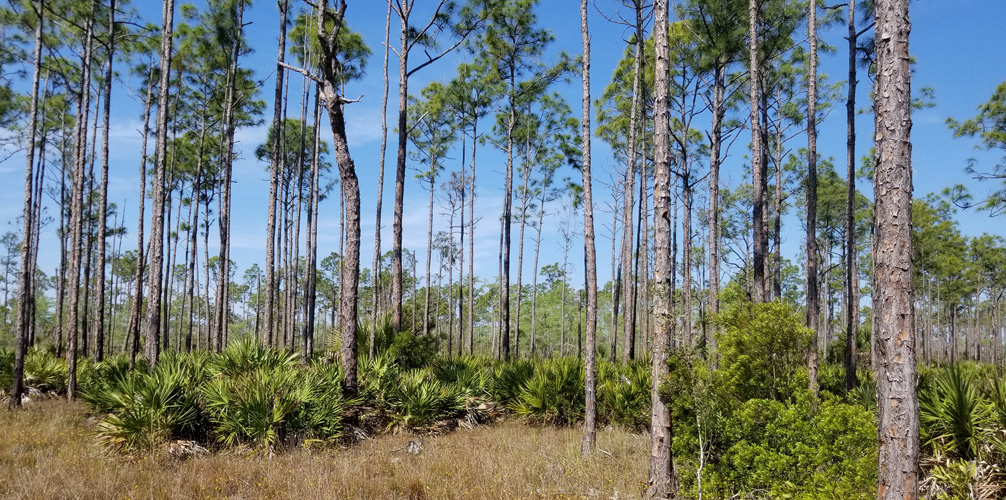
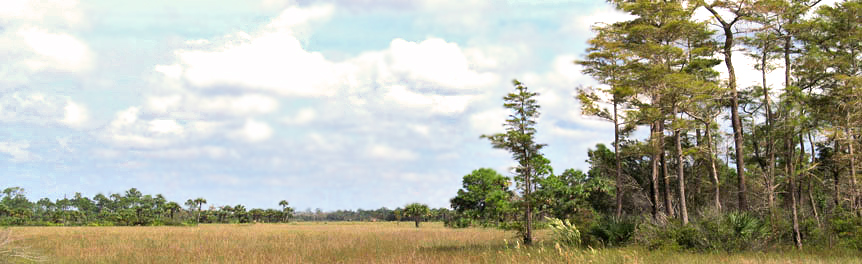
Picayune Strand State Forest is in the heart of the Big Cypress Basin. The majority of this hydric forest is under water during the wet season. The forest is a mosaic of cypress strands, wet prairie and pine flatwoods in the lowlands and subtropical hardwood hammocks in the uplands. The northern section of the Belle Meade Tract contains many second-growth South Florida slash pines, with some remnant trees being over 100 years old.
The forest provides a habitat for a variety of wildlife, including many threatened and endangered species. Although Florida panthers are rarely observed, visitors often find their tracks on many of the sandy roads and trails throughout the forest.
Recreation
Picayune Strand State Forest offers many recreational opportunities.
The Belle Meade Tract provides equestrians with a 22-mile trail that is included in the Trailtrotter Program. The Horseshoe Primitive Campground and Horseshoe Equestrian Group Camp are adjacent to the forest office and have access to a non-potable water source and a portable restroom. This location serves as the eastern trailhead for trail access and features horse paddocks. Please note that all horses in the forest must have current negative Coggins Test results, proof of which is to be carried by each rider at all times.
The Sabal Palm Hiking Trail is a 3.2-mile trail that provides hikers with the opportunity to view the many cypress trees that were too small to harvest in the 1940s and '50s. Some of these cypress trees are now over 100 years old. Bird-watchers might be able to catch a glimpse of wood storks, hairy woodpeckers and red-cockaded woodpeckers. The Sabal Palm Hiking Trail is part of the Trailwalker Program.
There are ample cycling opportunities on forest roads and old trams/trails.
Note: Off-highway vehicles (OHVs) are prohibited on Picayune Strand State Forest.
The Florida Fish and Wildlife Conservation Commission coordinates all hunting activities held in the forest. Visit Picayune Strand Wildlife Management Area for information.
In keeping with its mission to protect and manage Florida's forest resources, the Florida Forest Service has developed rules that apply to all State Forest visitors. Find out more about State Forest fees and rules.
Effective July 18, 2025, the section of Miller Boulevard from the former 64th Avenue SE to the former 80th Avenue SE is now permanently closed to vehicles to support a berm constructed for the Picayune Strand Restoration Project. See a
map of the road closure
[
 1.1 MB
]
. We apologize for any inconvenience.
1.1 MB
]
. We apologize for any inconvenience.
Picayune Strand State Forest
2121 52nd Ave. SE
Naples, FL 34117-2608
Passes are no longer available at the State Forest office. To purchase a pass or make a reservation, visit ReserveAmerica or call 1-877-879-3859.
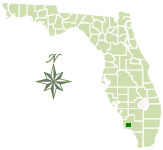
Picayune Strand State Forest is located in southwest Florida in eastern Collier County, approximately 2 miles east of Naples. The forest can be accessed via Everglades Boulevard from the north and Sabal Palm Road from the west. The forest office is located at 2121 52nd Avenue SE, Naples, FL 34117.
Total Acreage: 74,138
Counties: Collier
Smart device mapping is possible and encouraged in the State Forests. Before visiting a forest, search for “PDF Maps” in the app store to find an app that works for you and download our State Forest map, which is georeferenced.
Volunteers are needed to help with exotics treatment and facility, grounds and trail maintenance. Contact:
Michael Weston
Picayune Strand State Forest
Michael.Weston@FDACS.gov