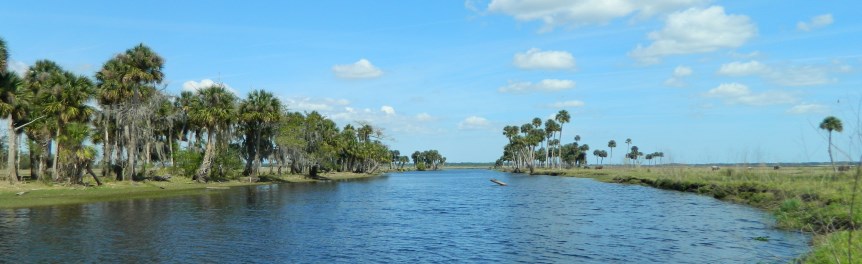
About Little Big Econ State Forest
Little Big Econ State Forest is approximately 11,696 acres and was established on March 24, 1994, by the Florida Legislature. The forest's name comes from combining the names of the Little Econlockhatchee River and the larger Econlockhatchee River, which come together just south of the forest.
The Muskogee word Econlockhatchee translates literally to “earth-mound stream” and means the “river of many mounds.” Long ago, Native Americans named the river for the multitude of man-made earthen mounds along the waterway.
This property has seen many historical uses, such as turpentine distilleries, cattle ranching and row crops. It also contains a portion of the old Florida East Coast Railway grade. Currently, the forest is managed to restore and maintain native ecosystems, protect and manage plants and animals, protect archaeological and historical sites, provide outdoor recreation, and practice sustainable forest and agricultural management activities.
Prescribed fire is used as an effective tool to improve forest health, ecological functions and wildlife habitat. Prescribed fire is applied to mimic natural fires and helps to reduce the hazards of wildfires.
Natural Features
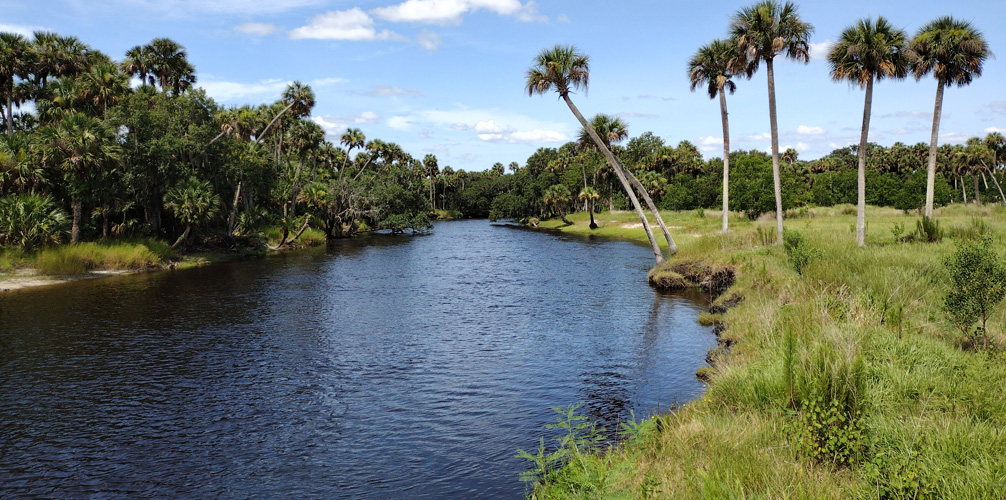
Little Big Econ State Forest’s most notable feature is the narrow, winding Econlockhatchee River, which flows 17 miles through the forest and empties into the St. Johns River. The Econlockhatchee River is designated as an Outstanding Florida Waterway and is the second-largest tributary to the St. Johns River.
The St. Johns River, which makes up the eastern boundary of the forest, is designated as an American Heritage River and, at 310 miles long, is the longest river in Florida.
The forest provides a crucial source of protection for wetlands and associated natural communities within the floodplains of the Econlockhatchee and St. Johns rivers. Other natural communities include wet prairie, pine flatwoods, sandhill and scrub.
The forest supports a variety of wildlife such as alligators, southern fox squirrel, gopher tortoise, gopher frog, bald eagle, sandhill crane, deer, turkey, gray squirrel, roseate spoonbill and wood stork.
Recreation
The forest is open during daylight hours for visitors to enjoy hiking, canoeing, horseback riding, bicycling, wildlife viewing and picnicking. Seasonal hunting takes place in sections of the forest east of Snow Hill Road. Please see the hunting section below for dates.
Hiking Trails
The American Hiking Society has named Little Big Econ State Forest one of the country’s most family-friendly hikes.
The forest has 15.6 miles of hiking trails, of which 8.9 miles are the Florida National Scenic Trail. The Florida National Scenic Trail can be accessed from our Barr Street hiking trailhead. Additional hiking trails can be accessed at the Brumley Road trailhead. The trail will lead the hiker through a variety of ecosystems such as pine flatwoods, scrub, sandhill and the majestic oak-palm hammocks along the Econlockhatchee River. The trail provides many scenic views and a chance to see some wildlife.
The Little Big Econ State Forest also offers the Kolokee Trail, which is a 5.2-mile loop trail that is included in the Trailwalker Hiking Program. Participants in the program are rewarded after hiking several designated trails.
The hiking trails are maintained by the Florida Trail Association.
-
Hiking Trail Map
[
 1.2 MB
]
1.2 MB
]
-
Brumley Road Hiking Trail Map
[
355.9 kB
]
-
Kolokee Trail Loop Map
[
923.1 kB
]
Paddling Trail
The Econlockhatchee River Paddling Trail was designated by the Florida Department of Environmental Protection. Paddlers can start their adventure at Seminole County’s canoe launch on Willingham Road and end their trip 8 miles upstream at the Snow Hill Road canoe launch, or they can paddle the full 20 miles to the C.S. Lee Boat Ramp on State Road 46. If you would like to extend your adventure to a two- or three-day trip, the Little Big Econ State Forest offers camping along the Econlockhatchee River. See the primitive camping section and the
Econlockhatchee River Paddling Trail at Little Big Econ State Forest Map
[
713 kB
]
. Along the paddling trail, there is an area for day use only where you can have lunch or take a break during your river adventure. It is first come, first served. Camping is not allowed here.
Primitive Camping
Little Big Econ State Forest offers primitive camping opportunities at the West Camp, which is located near the Barr Street hiking trailhead, designated for overnight parking for visitors with a camping reservation. The West Camp can only be accessed from the hiking trail and has designated campsites with a picnic table, lantern holder, charcoal grill and fire ring. There is no water, restrooms or electric at the campsites. For information and reservations, visit West Camp Little Big Econ State Forest.
Additional primitive camping opportunities are located along the Econlockhatchee River Paddling Trail. This area is called the East Camp Zone. It is first come, first served and does not have picnic tables or fire rings, and fees are not charged. See
Econlockhatchee River Paddling Trail at Little Big Econ State Forest Map
[
713 kB
]
for parking information and the
East Camp Zone Map
[
495.9 kB
]
for designated camp zones to use. Overnight parking is allowed at Seminole County’s Snow Hill canoe launch and C.S. Lee Park. Use of these overnight parking areas is at your own risk. The camp zone can be accessed only by canoe or kayak. At certain times of year, the camp zones are not accessible due to high river levels. For more information, visit East Camp Zone Little Big Econ State Forest.
-
East Camp Zone Map
[
495.9 kB
]
-
West Camp Map
[
289 kB
]
Horse Trail
Little Big Econ State Forest has 12.2 miles of horse trails that are included in the Trailtrotter Program and can be accessed from the Equestrian Trailhead on Snow Hill Road. Additional horse trails can be accessed at the Brumley Road trailhead. Both trailheads have a water trough to water the horses after your peaceful morning ride, and picnic tables where you can eat lunch. As you ride along the trails, you will go through a pine and hardwood forest and you may see deer, turkey and other wildlife.
Note: All horses must have proof of current negative Coggins Test results when on state lands. All children under the age of 16 are required to wear a protective helmet while riding on state lands.
-
Horse Trail Map
[
1.9 MB
]
-
Brumley Road Horse Trail Map
[
334.8 kB
]
Bicycle Trail
Little Big Econ State Forest has 10.5 miles of bicycle trails that can be accessed at the Jones East Trailhead on Snow Hill Road. The trails go through a variety of ecosystems such as pine flatwoods, sandhills and scenic oak-palm hammocks along the Econlockhatchee River. The beginning sections of the trail are easy, but the trails get more challenging the farther west you ride. If you are up for a challenge, then come and explore the bicycle trails at the Little Big Econ State Forest.
Helmets are recommended for all cyclists, and Florida law requires helmets for cyclists aged 16 and under.
The bicycle trails are maintained by SORBA Orlando.
-
Bike Trail Map
[
256.5 kB
]
Hunting and Fishing
Hunting and fishing in Little Big Econ State Forest are regulated by the Florida Fish and Wildlife Conservation Commission (FWC).
The Kilbee and Yarborough tracts of Little Big Econ State Forest are open for hunting and are part of the Little Big Econ Wildlife Management Area, which is managed cooperatively by the Florida Forest Service and FWC. Check the Little Big Econ Wildlife Management Area Hunting Brochure for hunting dates. Wildlife hunted in the forest includes deer, ducks, hogs, rabbits, squirrels and turkeys.
Fishing is a popular activity along the Econlockhatchee and St. Johns rivers, where largemouth bass, catfish, crappie, bluegill and other fish are frequently caught.
Great Florida Birding and Wildlife Trail
The Demetree and Kilbee tracts of Little Big Econ State Forest are part of the Great Florida Birding and Wildlife Trail.
On the Great Florida Birding and Wildlife Trail website, select "Explore the Trail" and then select "East." Little Big Econ State Forest has over 160 bird species.
Some of the birds you may see on your visit are the bald eagle, crested caracara, sandhill crane, wood stork, swallow-tailed kite and Bachman’s sparrow.
Visitor Center
At the visitor center, we have educational exhibits about land management, recreation, wildlife and history.
Picnic Pavilion
The picnic pavilion near the visitor center can be reserved for special events.
Call Little Big Econ State Forest for more information and fees.
In keeping with its mission to protect and manage Florida's forest resources, the Florida Forest Service has developed rules that apply to all State Forest visitors. Find out more about State Forest fees and rules.