Pasture mealybugs, Heliococcus novovillei and Heliococcus summervillei, are grass specialist insect pests that can severely affect pastures, hayfields, turfgrass and sugarcane. In October 2025, Heliococcus summervillei was first reported in the continental United States in Texas and eventually spread eastward to Louisiana. In May 2026, pasture mealybugs were detected in Florida for the first time, infesting fields of limpograss in St. Lucie County.
On September 1, 2026, Division of Plant Industry (DPI) scientists and collaborators published the description of a new species of pasture mealybug, Heliococcus novovillei, an invasive pest responsible for significant damage to pasture grasses and sugarcane in the southern United States, Mexico and Australia. Previously regarded as a "new variant" of Heliococcus summervillei, the new species was distinguished through detailed morphological study and DNA analysis. Researchers also confirmed that H. summervillei occurs in Florida and Texas, but at much lower abundance than H. novovillei, meaning two related pasture mealybug species had been confused under a single name. The study provides new identification tools, molecular data, host and distribution records, and a taxonomic foundation for ongoing research and management of this emerging agricultural pest. Although slide‑mounted specimens or molecular data are still required for confident differentiation, the species currently causing extensive damage in the United States and Mexico is H. novovillei.
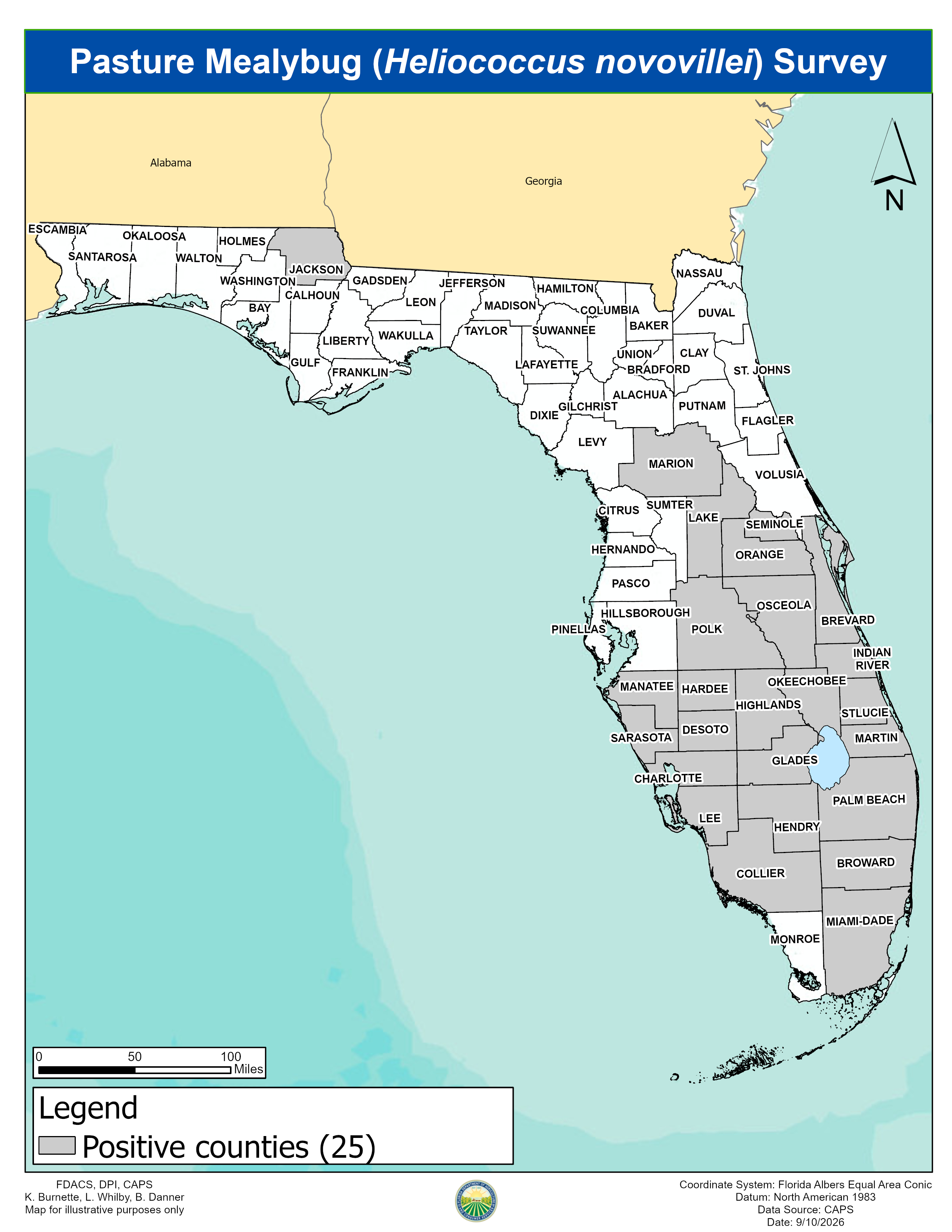
Surveys have confirmed the mealybug's presence in Brevard, Broward, Charlotte, Collier, DeSoto, Glades, Hardee, Hendry, Highlands, Indian River, Jackson, Lake, Lee, Manatee, Marion, Martin, Miami-Dade, Okeechobee, Orange, Osceola, Palm Beach, Polk, St. Lucie, Sarasota and Seminole counties.
Mealybugs (Pseudococcidae) are a family of tiny sap-feeding insects grouped with the scale insects (Hemiptera: Coccomorpha). They have long piercing-sucking mouthparts and may cause plant damage through direct feeding damage and by vectoring plant diseases. There are over 2,000 species of mealybugs worldwide and over 80 species in Florida alone.
Products to Consider for the Control of Pasture Mealybug
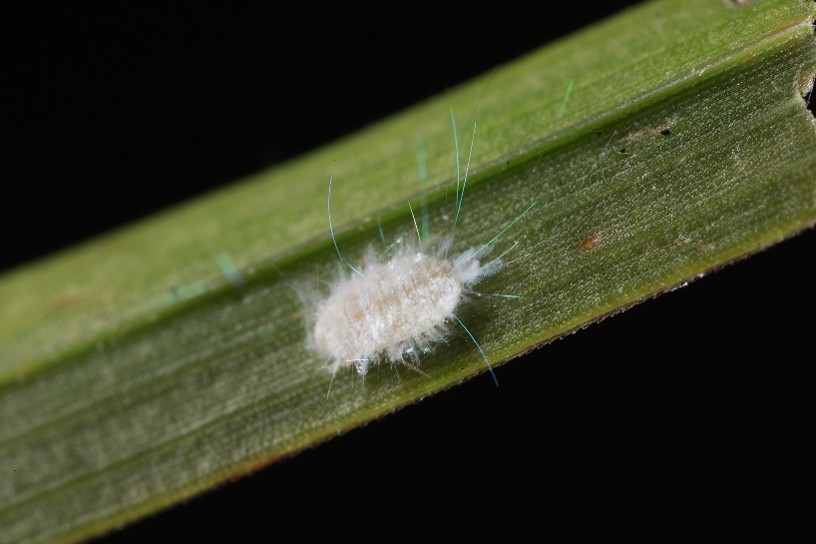
Photo: Erin C. Powell, FDACS-DPI
Damage
Pasture mealybug can cause severe dieback of pastures and grasses, which poses a major risk to Florida’s pasture grass and sugarcane industries. The most damage has been found on limpograss and sugarcane, but bahiagrass, bermudagrass, crabgrass and other roadside grasses in Florida are also affected. There is a potential for turfgrass to be affected, but pasture mealybug has not yet been found infesting turf in Florida.
Symptoms can appear within a week of infestation and include:
- Yellowing that progresses to red or purple discoloration (primarily yellow in sugarcane and guinea grass)
- Plants that look drought-stressed even after rain
- Overall stunting and poor root development
- Eventual senescence of leaves and death of the grass
Identification
The pasture mealybug is oval shaped and has a fluffy, wool-like appearance with long, straight rods of iridescent opaque wax projecting from the body. Young mealybug nymphs and adult female mealybugs are a creamy white color, then turn pink after mating. Males turn pink ahead of pupation and remain pink in their winged adult form. They can most commonly be found feeding on the underside of grass blades. Adult females then move to the thatch or soil to reproduce. Pasture mealybug is unlikely to be found on non-grass host plants.
Pasture Mealybug Pest Alert
[
 3.9 MB
]
3.9 MB
]
Reducing Spread and Pest Management
The use of contaminated hay-cutting or mowing equipment and sprigging new hay fields with infested material may quickly spread mealybugs to new areas. To reduce spread, producers should be cautious when moving equipment, hay or livestock between fields.
- Quick Guide for Florida Residents [ Adobe PDF Document ]
- Quick Guide for Lawncare Professionals [ Adobe PDF Document ]
- Quick Guide for Parks and Athletic Field Crews [ Adobe PDF Document ]
- Quick Guide for Roadside, Right-of-Way and Public Land Crews [ Adobe PDF Document ]
Pasture Mealybug Photos
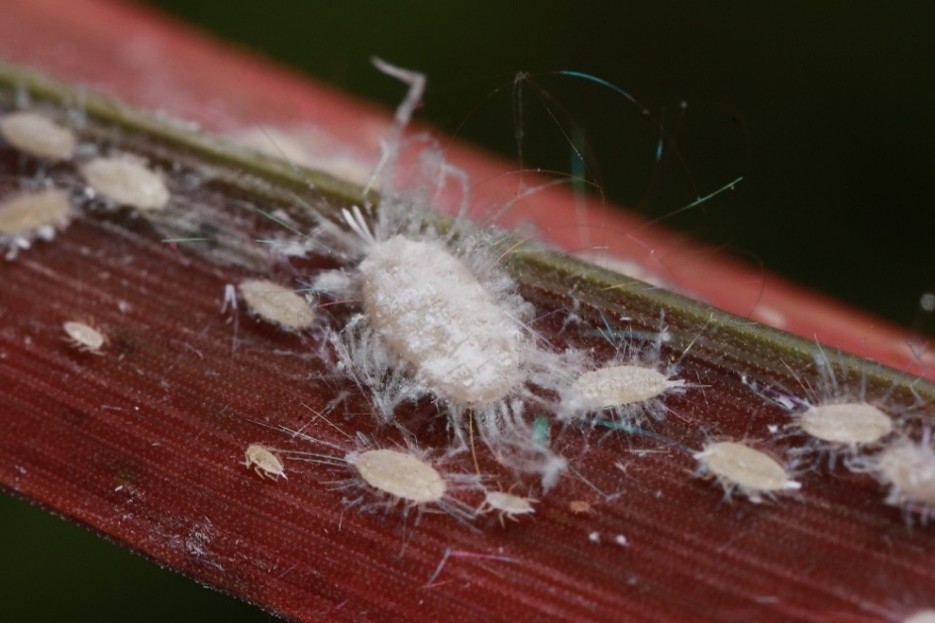
Pasture mealybug adult female and nymphs on a blade of limpograss. Photo: Erin C. Powell, FDACS-DPI
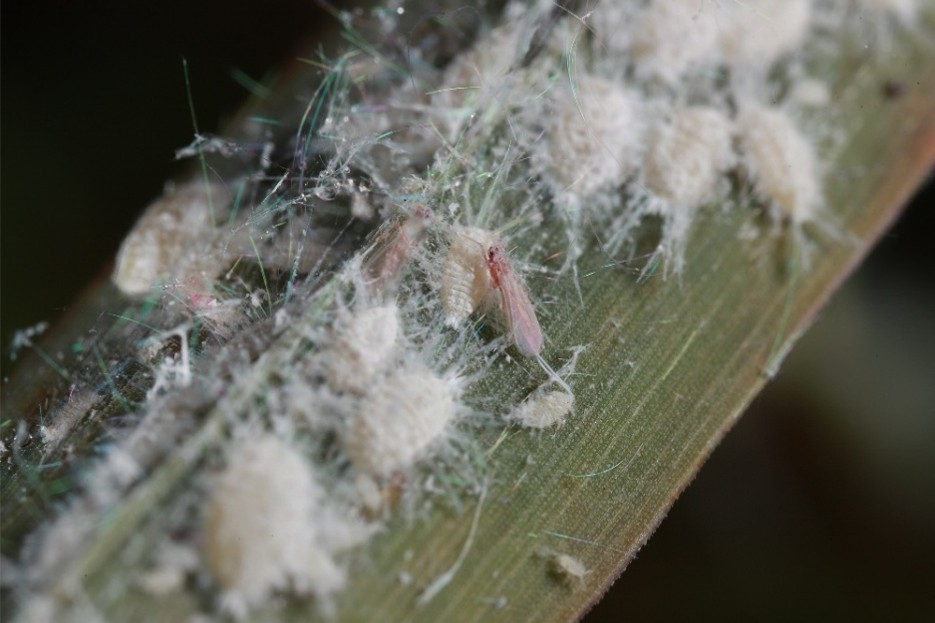
A pink-bodied winged adult male in a heavy infestation of unmated females and nymphs. Photo: Erin C. Powell, FDACS-DPI
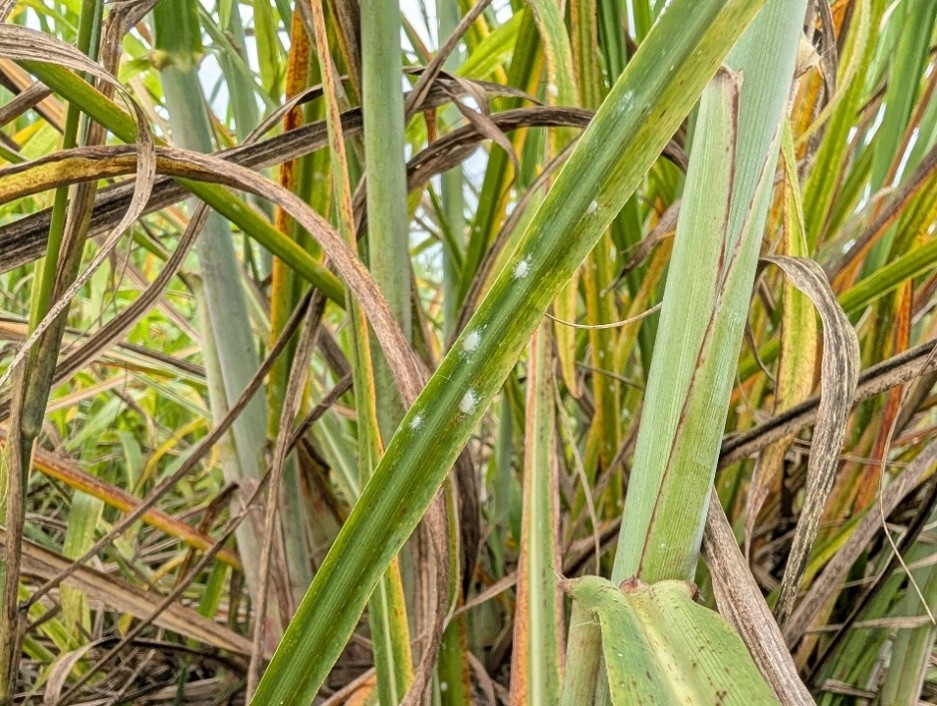
Pasture mealybug on sugarcane, showing the yellow damage. Photo: Erin C. Powell, FDACS-DPI
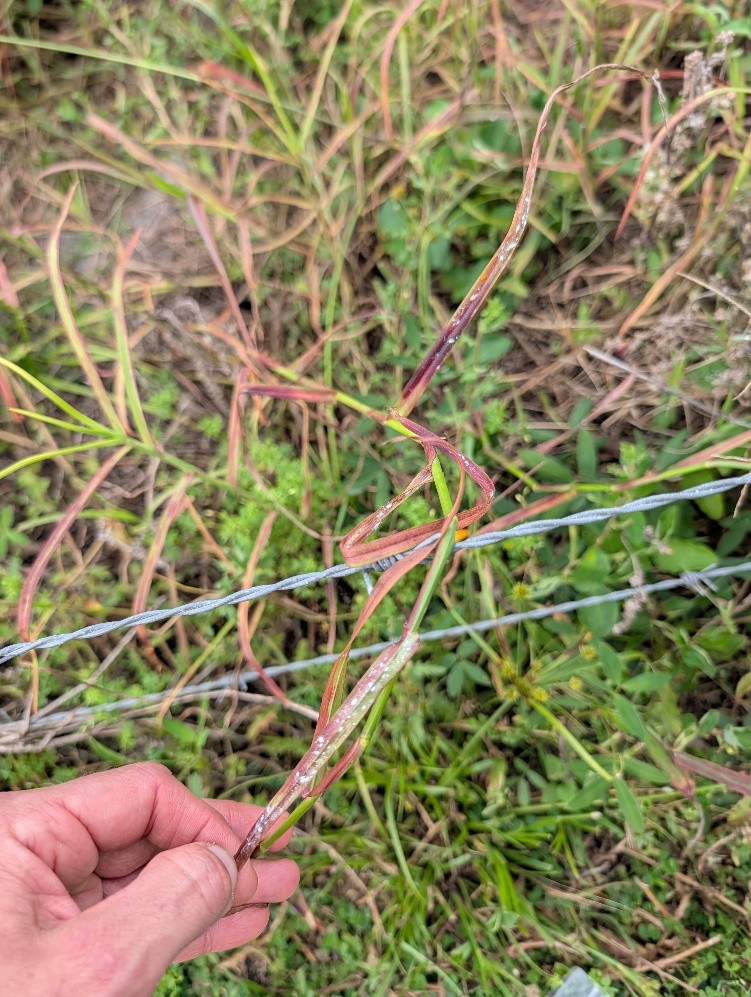
Reddening and dying leaves with pasture mealybugs visible on limpograss. Photo: Erin C. Powell
Reporting and Sample Submissions
If you suspect that your pasture, turf or sugarcane field is showing signs of a pasture mealybug infestation, submit a sample to DPI’s Entomology section for identification or contact the DPI Helpline at 1-888-397-1517 or DPIHelpline@FDACS.gov.