Pest Information
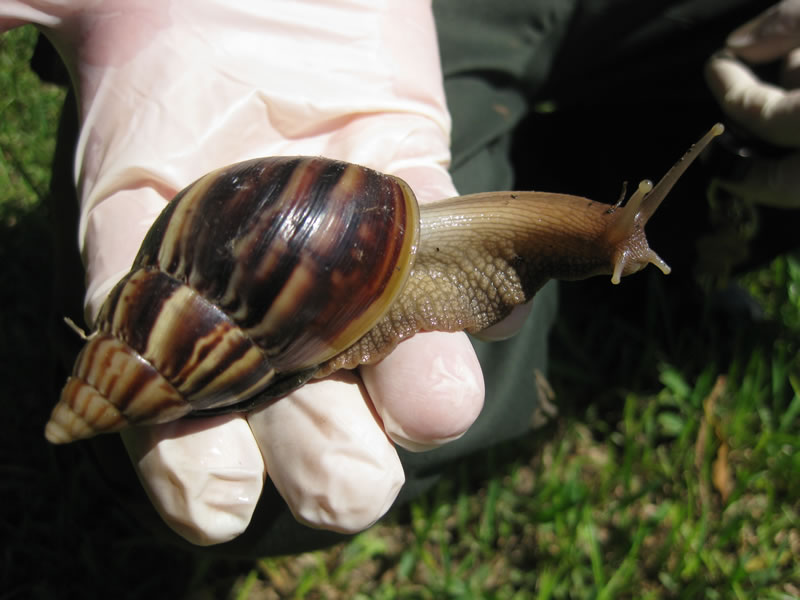
The giant African land snail (GALS) is one of the most damaging snails in the world and consumes at least 500 different types of plants. These snails could be devastating to Florida agriculture and natural areas as they cause extensive damage to tropical and subtropical environments. The snails also pose a serious health risk to humans by carrying the parasite rat lungworm, known to cause meningitis in humans. Giant African land snails are illegal to import or possess in the United States without a permit.
The giant African land snail has been eradicated three times in Florida. The first detection was in 1969 and was eradicated in 1975. The pest was also eradicated in 2021 from a detection in 2011 in Miami-Dade County and again in 2026 from a detection in 2022 in Lee County after being free of live snails for over three years.
There are currently two quarantine areas in Florida. These quarantines are in Broward and Pasco counties. It is unlawful to move the giant African land snail or a regulated article, including, but not limited to, plants, plant parts, plants in soil, soil, yard waste, debris, compost or building materials, within, through or from a quarantine area without a compliance agreement.
Detailed information about each quarantine and treatment area can be found at the following links:
- Broward County Quarantine and Treatment Information
- Pasco County Quarantine and Treatment Information
Giant African land snails vary in phenotype (color pattern). The populations previously eradicated in South Florida and the populations in Lee County possessed dark brown shells with grayish-brown flesh. The snails detected in Pasco County have light to dark brown shells with milky white flesh. The lighter-fleshed snails are sometimes referred to as “albino GALS” and are more desirable in the illegal pet trade. If you are interested in adopting an invertebrate pet, please visit the USDA Invertebrate Pets website.
Think you found a giant African land snail? Refer to the ID sheet. Still not sure? Email a photo for identification to DPIHelpline@FDACS.gov.
-
Snail ID Sheet
[
 1.5 MB
]
(FDACS)
1.5 MB
]
(FDACS) -
Comparing GALS to Ghost Snail
[
1.9 MB
]
-
Giant African Land Snail Pest Alert
[
700.5 kB
]
(FDACS)

Lifecycle of Giant African Land Snail
DO NOT HANDLE SNAILS WITHOUT WEARING GLOVES!