On June 2, 2023, the Florida Department of Agriculture and Consumer Services (FDACS) confirmed the detection of giant African land snail in the Miramar area of Broward County. This detection was reported to the FDACS Division of Plant Industry Helpline.
On June 20, 2023, FDACS's Division of Plant Industry enacted a quarantine and started the treatment process to eradicate this detrimental agricultural pest. FDACS will treat properties with a metaldehyde-based molluscicide (snail bait). The treatment is labeled by the U.S. Environmental Protection Agency for residential use.
Quarantine
It is unlawful to move the giant African land snail or a regulated article, including, but not limited to, plants, plant parts, plants in soil, soil, yard waste, debris, compost or building materials, within, through or from a quarantine area without a compliance agreement.
To obtain a compliance agreement, call 1-888-397-1517 or email DPIHelpline@FDACS.gov.
-
Sample Compliance Agreement for Nursery/Stock Dealer/Garden Center
[
 579.6 kB
]
579.6 kB
]
-
Sample Compliance Agreement for Solid Waste Facilities and Commercial Trash Haulers
[
559.9 kB
]
-
Sample Compliance Agreement for Landscape/Lawn Maintenance
[
574.2 kB
]
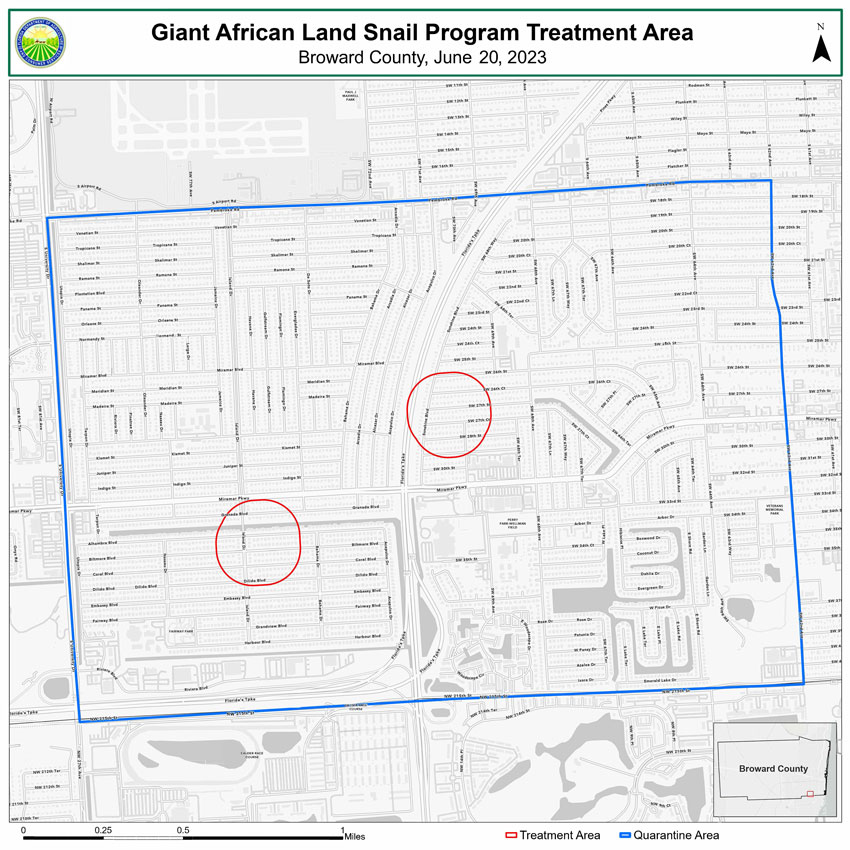
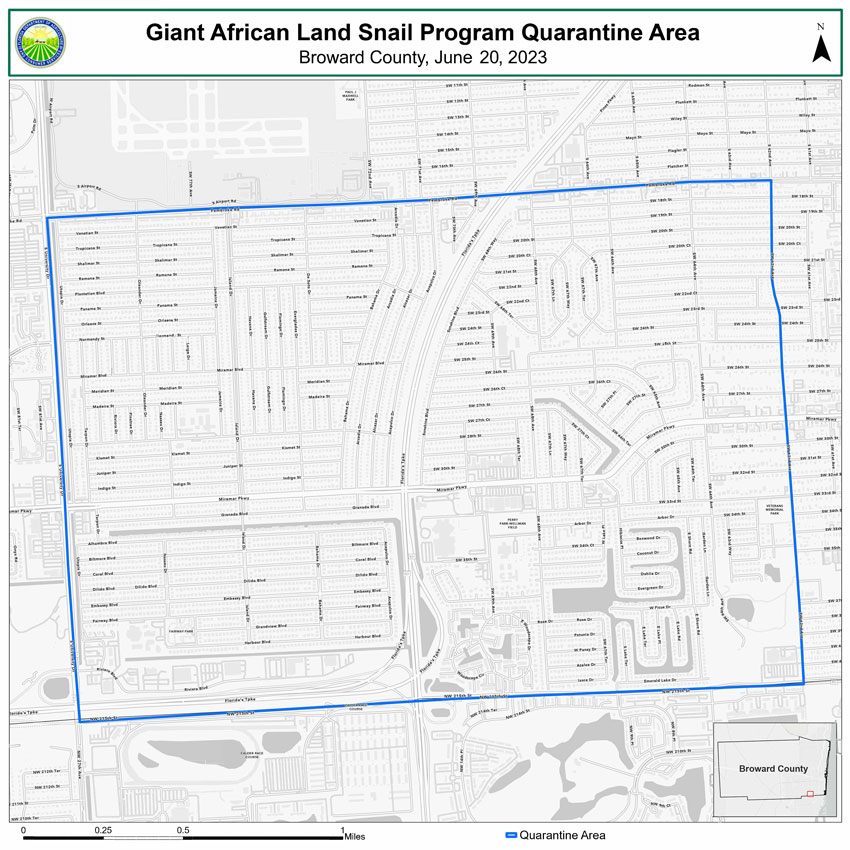
Starting at the intersection of Pembroke Road and South University Drive, proceed south on South University Drive to NW 215th Street. From this intersection, proceed east to SW 62nd Avenue. At this intersection, progress north to Pembroke Road. The quarantine will proceed west on Pembroke Road to its intersection with South University Drive.
Treatment
Metaldehyde is a pesticide used to control snails and slugs and is approved for use in a variety of vegetable and ornamental crops in the field or greenhouse, on fruit trees, small-fruit plants, in avocado and citrus orchards, berry plants, banana plants and in limited residential areas. Available products can be applied as granules, sprays, dusts or bait pellets. Applications are typically made to the ground around the plants or crops to be protected.
Property owners inside the treatment area will be notified in person or by posted notice at least 24 hours in advance of the planned pesticide treatment.
Metaldehyde works by disrupting the mucus production ability of snails and slugs. This reduces their digestion and mobility and makes them susceptible to dehydration. Snails and slugs that have eaten metaldehyde often seek hiding places, become inactive and begin to die within days.