
Hiking

Biking

Horseback Riding

Fishing

Seasonal Hunting
Plank Road State Forest is one continuous tract of land comprising over 15,000 acres along the upper St. Marks River near Tallahassee, Florida. Its name is derived from the historic wood plank road that was constructed in the mid-1800s to transport cotton and other goods from Newport, Florida, where the St. Marks River ceases to be reasonably navigable, to the Georgia line. Although there are no signs of the original plank road, a paved portion of Old Plank Road makes up part of the forest’s boundary on the west.
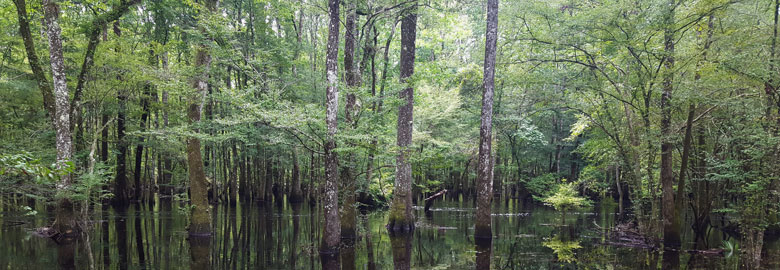
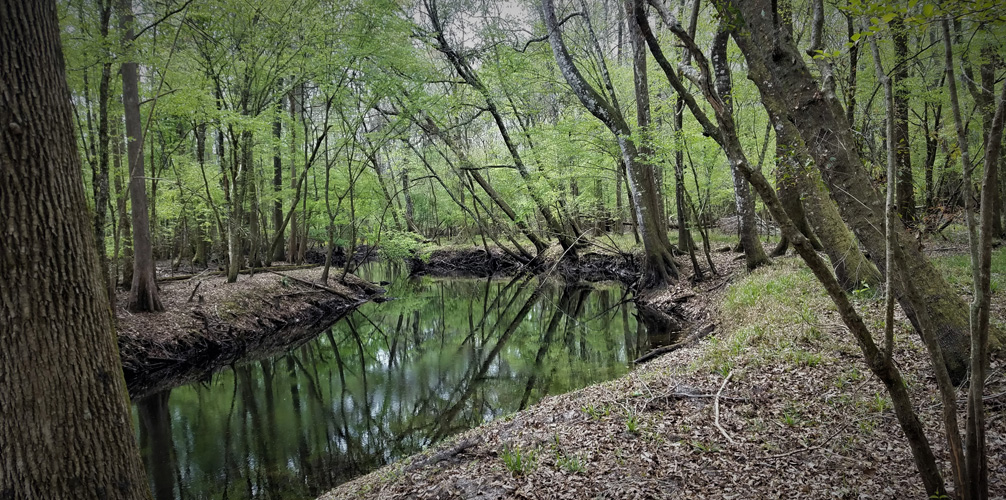
The St. Marks River is the dominant feature of Plank Road State Forest and flows from northeast to southwest. The forest's pristine wetlands provide water quality protection for the St. Marks River, an Outstanding Florida Water, and numerous springs, including second magnitude Horn Spring, located on the adjacent Natural Bridge Battlefield Historic State Park, and the first magnitude St. Marks Spring just to the south.
Plank Road State Forest is a Florida Forever project acquired through the Land Acquisition Trust Fund in 2017. It is a habitat for an abundance of wildlife and serves as the major part of the Upper St. Marks River Corridor, maintaining biodiversity, increasing public recreation opportunities, and protecting water resources within the forest as well as the surrounding area.
Since taking over the management of Plank Road State Forest, the Florida Forest Service has proposed a comprehensive land management plan for outdoor recreation, prescribed fire and land restoration, wildlife habitat maintenance, protection of cultural resources, educational/research opportunities, and the sustainable yield of forest products.
Sustainable forest management practices on Plank Road State Forest are fundamental in the restoration and maintenance of forest ecosystems and provide long-term economic and social benefits for generations to come. These practices include reforestation, harvesting, restoration and timber stand improvement, all of which follow the Silviculture Best Management Practices (BMPs) defined by the Florida Department of Agriculture and Consumer Services.
Another crucial tool the Florida Forest Service uses to maintain healthy forest and wildlife habitat is periodic prescribed burning of the forest. Introducing fire regularly, in a controlled manner, encourages the growth of the forest’s commercially valuable trees and plants that provide food for the forest’s wildlife.
The St. Marks River, a designated Outstanding Florida Water, forms on the north and east sides of the forest, while many tributaries, such as Gum Creek, Limestone Creek, Chicken Branch and Hamlin Branch, flow through the forest and into the river.
There are many natural communities within the forest. Among these are floodplain swamp, bottomland forest, sandhill and flatwoods communities. Bald cypress, red maple, swamp tupelo, sweetgum and water oak are commonly found in the floodplain swamps and bottomland forests. Longleaf pine, post oak and turkey oak can be seen in the drier sandhill areas. Flatwoods communities are dominated by gallberry, loblolly pine, slash pine and titi.
Plank Road State Forest is home to many wildlife species, including the American alligator, bald eagle, feral hog, Florida black bear, red-shouldered hawk, white-tailed deer and wild turkey.
Hunting is one of the recreational opportunities on Plank Road State Forest. Approximately 8,000 acres are established as the Plank Road Wildlife Management Area and parts of it open to regulated hunting under the direction of the Florida Fish and Wildlife Conservation Commission (FWC). Visit the FWC website for more information about permits and fees.
The public can access the forest through three access points off Old Plank Road, Tram Road and Highway 59. Hiking, bicycling, horseback riding and nature study can also be enjoyed using existing roads and firelines. (Please note that proof of current negative Coggins test is required for all horses in all Florida State Forests.) Access to the St. Marks River is available for fishing and paddling.
The newly constructed headquarters off Old Plank Road serves as the forest work center and visitor information center. Informational and educational kiosks are planned for construction at the various entrances. Plans for hiking, biking and/or equestrian trails, primitive campsites and picnic pavilions are under consideration.
In keeping with its mission to protect and manage Florida's forest resources, the Florida Forest Service has developed rules that apply to all State Forest visitors. Find out more about State Forest fees and rules.
Day use is from sunrise to sunset.
Plank Road State Forest
8701 Old Plank Road
Tallahassee, FL 32305
(850) 681-5936
Email Plank Road State Forest
Passes are no longer available at the State Forest office. To purchase a pass or make a reservation, visit ReserveAmerica or call 1-877-879-3859.
Plank Road State Forest is located along the Upper St. Marks River Corridor between Tram Road on the north and Natural Bridge Road to the south. The forest encompasses eastern Leon County and western Jefferson County, Florida. The State Forest headquarters office is located in the southwest corner of the forest on Old Plank Road, 2.7 miles north of the intersection of Old Plank Road and Natural Bridge Road.
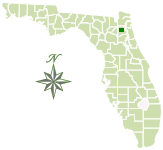
Total Acreage: 15,837
Counties: Jefferson and Leon
Smart device mapping is possible and encouraged in the State Forests. Before visiting a forest, search for “PDF Maps” in the app store to find an app that works for you and download our State Forest map, which is georeferenced.
 508.8 kB
]
508.8 kB
]
Contact:
Jai Subramanya
Jai.Subramanya@FDACS.gov