About Belmore State Forest
Belmore State Forest was acquired under the Florida Forever Program, specifically the Northeast Florida Timberlands and Watershed Reserve Project, and by the St. Johns River Water Management District, using Forest Legacy Stewardship funds. The Florida Forest Service has management responsibility for Belmore State Forest.
The Florida Forest Service's multiple-use management system creates a balance between the conservation of natural resources and outdoor recreational use.
Natural Features
Nine different natural biological communities can be found in Belmore State Forest. These include sandhills, mesic flatwoods, baygalls, wet flatwoods and floodplain forests, each with unique plants, animals and physical characteristics.
Wild turkeys, white-tailed deer, hawks and songbirds are just a few of the species that can be found in the forest. Belmore is also home to several threatened species and species of special concern, including the gopher tortoise, Sherman’s fox squirrel, Florida black bear, American alligator and eastern indigo snake.
The communities are managed by the Florida Forest Service using a combination of timber harvesting, reforestation and invasive species eradication. Many of these communities are fire-maintained. The Florida Forest Service uses prescribed fire to maintain wildlife habitats and reduce heavy fuel loads. Belmore State Forest features numerous seepage streams and blackwater drainages and creeks that have created a ravine mosaic. Ates Creek and its tributary Devil’s Den Creek are examples of such hydrologic features.
Recreation
The forest is open during daylight hours for hiking, bicycling, horseback riding and wildlife viewing. The current network of unpaved roads is ideal for these activities, and a trail system is being planned to improve these activities in the future. There are plans to provide overnight primitive camping areas in the future.
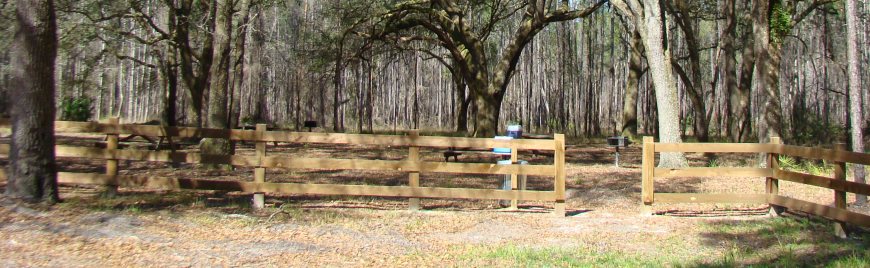
Coot’s Shanty Recreation Area on the Ates Creek Tract provides an ideal location for picnicking as well as a good place to begin hiking the forest. Coot's Shanty Recreation Area is the start/end point for the Homesteaders Hollow Hiking Trail. This trail traverses approximately 4 miles of managed forestland and provides a glimpse back in time.
The Old Hunt Camp Recreation Area on the Satsuma Tract of Belmore offers hiking on the Satsuma Trail and horseback riding on the Old Hunt Camp Equestrian Trail.
Belmore State Forest is open to regulated hunting and fishing under the direction of the Florida Fish and Wildlife Conservation Commission. We encourage non-hunting recreationists to check the Belmore Wildlife Management Area regulations and season dates before visiting Belmore State Forest.
In keeping with its mission to protect and manage Florida's forest resources, the Florida Forest Service has developed rules that apply to all State Forest visitors. Find out more about State Forest fees and rules.
Note: Proof of current negative Coggins test is required for all horses in all Florida State Forests.
Belmore State Forest
Florida Forest Service
4980 State Road 16 W.
Starke, FL 32091
Primary Contact
(904) 529-2357 (Monday–Friday)
(904) 529-2358 (Saturday and Sunday)
Email Belmore State Forest
Secondary Contact
(904) 406-6385
Email Frank Burley
Passes are no longer available at the State Forest office. To purchase a pass or make a reservation, visit ReserveAmerica or call 1-877-879-3859.
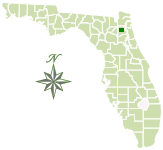
Belmore State Forest is located in Northeast Florida, in southern Clay County. The forest is approximately 15 miles west of Green Cove Springs and 20 miles southwest of Orange Park.
The forest is composed of two tracts, the Satsuma Tract in the north and the Ates Creek Tract in the south. Satsuma has one entrance from State Road 16.
The Ates Creek Tract is accessible from County Road 315 on the north and Bellamy Road on the south. The forestry headquarters is located on State Road 16.
Total Acreage: 12,262
Counties: Clay
Smart device mapping is possible and encouraged in the State Forests. Before visiting a forest, search for “PDF Maps” in the app store to find an app that works for you and download our State Forest map, which is georeferenced.
Volunteers are needed to help with campground, trailhead and trail maintenance. Contact:
Justin Rogers
Jacksonville District
Justin.Rogers@FDACS.gov
 1 MB
]
. We apologize for any inconvenience.
1 MB
]
. We apologize for any inconvenience.