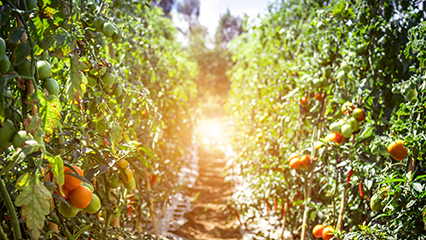
What Is Food Recovery?
Food recovery is the practice of collecting wholesome food that would otherwise go to waste and donating it to local food distribution agencies to help feed those in need. Food is collected from places such as farms, schools, restaurants, grocery stores and produce markets.
The Florida Department of Agriculture and Consumer Services’ Food Recovery Program works to recover food in two ways:
- By working with farmers. Volunteers visit the farms and collect surplus produce in a process known as gleaning.
- By working with schools. We provide Florida schools with guidance on food waste audits, share tables, food donations and composting.
The Food Recovery Hierarchy is a tool that prioritizes actions that organizations and individuals can take to prevent and divert food waste.
Why Is Food Recovery Important?
- Forty percent of the food produced in the U.S. goes uneaten.
- Approximately one-fifth of Floridians are food insecure, including over 1 million children.
- Food makes up over one-fifth of total landfill weight in the U.S., resulting in the release of methane.
View Let's Talk Trash, a food waste infographic from the U.S. Department of Agriculture (USDA).
Food Recovery on the Farm
-
Field Gleaning Tips and Rules
[
 674 kB
]
674 kB
]
-
Florida's Seasonal Availability Calendar
[
2 MB
]
-
How Is Food Recovered on a Farm?
[
1.1 MB
]
-
Tax Incentives and Protection from Liability (English)
[
611.2 kB
]
-
Tax Incentives and Protection from Liability (Spanish)
[
612.8 kB
]
Food Recovery in Schools
-
Composting in Schools (English)
[
1.5 MB
]
-
Composting in Schools (Spanish)
[
1.1 MB
]
-
Food Recovery Program Flyer
[
630.6 kB
]
-
Food Recovery Resource Packet
[
6.3 MB
]
- Food Waste Reduction Tool Kit with Free Lesson Plans
-
School Food Donation Checklist
[
656.7 kB
]
-
Share Table Implementation Checklist
[
158.8 kB
]
-
Student Food Waste Audits (English)
[
606.6 kB
]
-
Student Food Waste Audits (Spanish)
[
616.7 kB
]
-
What Are Share Tables? (English)
[
868.6 kB
]
-
What Are Share Tables? (Spanish)
[
871.8 kB
]
- What You Can Do to Help Prevent Wasted Food (USDA)
Food Recovery in Schools — Video Resources
- Chapter 1: An Introduction to Food Recovery [ Windows Media Video ]
- Chapter 2: Student Food Waste Audits [ Windows Media Video ]
- Chapter 3: Share Tables and Food Donations [ Windows Media Video ]
- Chapter 4: Gleaning Field Trips [ Windows Media Video ]
Food Recovery at Home
- Cook It — The Amazing Waste Cookbook
- Store It
-
Compost It (English)
[
1.4 MB
]
-
Compost It (Spanish)
[
1.4 MB
]
What Can You Do to Help?
Learn More or Volunteer
To learn more or get involved in food recovery, email InfoFNW@FDACS.gov.
Join the EPA's Food Recovery Challenge
As part of the U.S. Environmental Protection Agency's Food Recovery Challenge, organizations pledge to improve their sustainable food management practices and report their results. Learn more about the EPA's Food Recovery Challenge.
Legislative Organizational Partnerships
On an annual basis, food distribution programs are funded by the Florida Legislature through the FDACS Food Recovery Program. Partnerships for the 2022-2023 fiscal year include:
- Feeding Florida’s Farmers Feeding Florida Program, which purchases cosmetically blemished produce from local agricultural producers and provides it to households in need through Feeding Florida’s member food banks. For more information on Farmers Feeding Florida, contact Sherri Atwell, Director of Produce Recovery, at 1-855-352-3663 ext. 1 or Sherri@FeedingFlorida.org.
- The Farm Share Program, which provides food free of charge to local community partner agencies as well as directly to families, children, senior citizens, and individuals in need to address food insecurity throughout the state of Florida. For more information on this program, contact Farm Share at 1-305-246-3276 or information@farmshare.org.
For more information on these organizational partnerships, contact the FDACS Food Recovery Specialist, Bela Delgado, at (850) 617-7440 or Bela.Delgado@FDACS.gov.
How We Help Reduce Food Waste in Florida
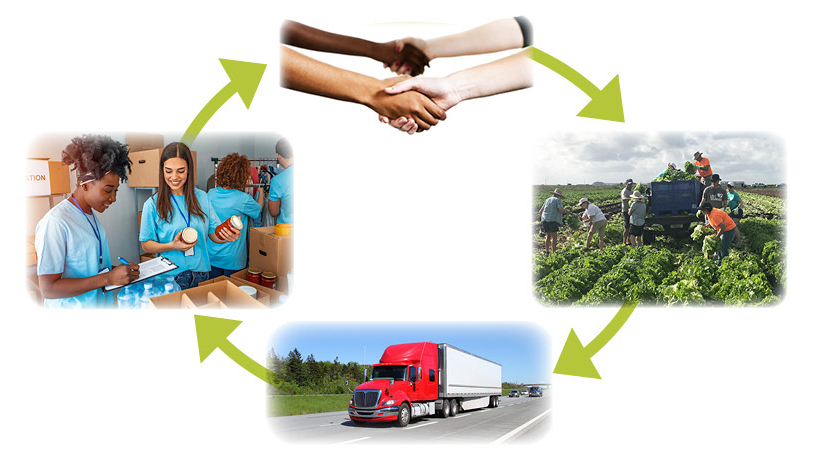
3,537,205
Pounds of fresh Florida produce recovered through our TEFAP Farm to Food Bank Project.
Statistics collected and updated quarterly by the Florida Department of Agriculture and Consumer Services.