Hardening your home and outbuildings against fire is important to reduce wildfire impact and its spread. Consider the following areas as you harden your home:
Interior
- Keep working fire extinguishers on hand.
- Install a smoke alarm on each level of your home, inside and near all bedrooms.
- Test monthly and replace batteries annually.
Roofs
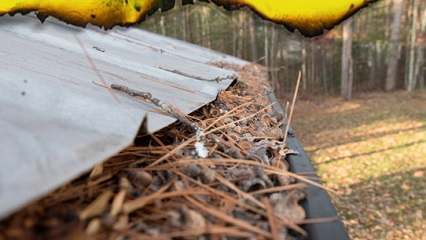
- Regularly clear your roof and gutters of branches, leaves and other types of debris.
- Roofs made of wood shingle or wood shake are especially vulnerable to fire. Consider other, safer materials:
- Class A asphalt/fiberglass
- Sheet metal
- Tile
- Concrete
Eaves
(Eaves are the edges of the roof that overhang the face of a wall and, normally, project beyond the side of a building.)
- It is important to make sure that your eaves are made with fire resistant materials and in good condition to ensure that a fire cannot enter your attic.
Vents
- Clean vents regularly.
- Remove debris surrounding these areas.
- Consider installing vent covers to prevent fire from entering through them.
Walls
- Clear exterior walls of foliage and brush.
- Consider fire-resistant building materials from foundation to roof.
Windows and Doors
- Windows and doors must be constructed to withstand high temperatures.
- Regularly inspect windows and doors in your home and make sure they are sealed with no leaks.
- Install dual-pane windows with tempered glass, shutters, insect screens.
Balconies and Decks
- Use fire-resistant and noncombustible materials to repair or add balconies or decks onto your home.
- Eliminate debris and combustible products surrounding these areas.
- Consider fire-resistant and noncombustible furniture in outdoor spaces.
Emergency Vehicle Accessibility
Here are the things to consider to guarantee that your home is ready to help emergency responders arrive to the scene of a wildfire in a timely manner:
- Driveways should be designed to allow all emergency vehicles and equipment to reach your house.
- Access roads should have a minimum 10-foot clearance on either side of the traveled section of the roadway and should allow for two-way traffic.
- Ensure that all gates open inward and are wide enough to accommodate emergency equipment.
- Trim trees and shrubs to allow a minimum of 13.5 feet from the side of the road so emergency vehicles can pass.
- Ensure your address is clearly visible from the road.
More Home Hardening Resources
-
Ready, Set, Go Resources
[
 2.9 MB
]
. Your personal wildfire action plan (see page 5)
2.9 MB
]
. Your personal wildfire action plan (see page 5) - Create Defensible Space Around Homes