
More Than 80 Years of Preservation and Stewardship
Florida State Forests Historical Timeline
Beginning in 1935, legislation authorized the Florida Board of Forestry to manage State Forests and parks acquired by the federal government and turned over to the state for development and maintenance.
July 1, 1936–June 30, 1938
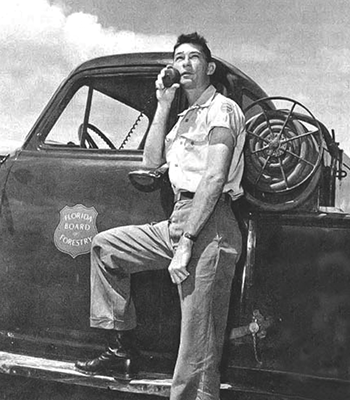
The Fifth Biennial Report of the Florida Forest and Park Service stated, “Those wild lands suitable for timber production and lacking unusual scenic, historical, or botanical qualities, or not highly adaptable to active recreation, are best suited for the practice of forestry. Briefly, wild land should be devoted to its highest uses. If it is best suited for park purposes it should be developed and used accordingly, provided there is a public or social need for such uses in any given area because of the proximity to population centers, tourist traffic, or danger of destruction to unusual botanical, historic, or physiographic features.” This philosophy guided assignment of property to either park or forest management.
1936
Pine Log State Forest was established in Bay and Washington counties with a total of 6,960 acres.
1937
Cary State Forest was established in Nassau and Duval counties with a total of 3,413 acres. Cary State Forest was named after Dr. Austin Cary, who is known as the "Father of Forestry" in Florida.
1939
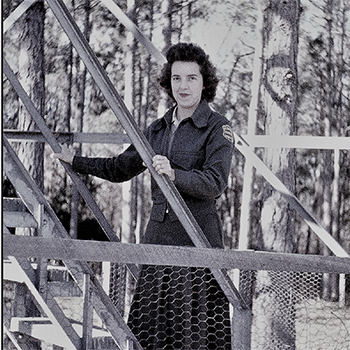
Blackwater River State Forest was established through a cooperative license agreement with the U.S. Department of Agriculture (USDA) and the Florida Board of Forestry. The agreement was for a period of 50 years on 181,822 acres located in Santa Rosa and Okaloosa counties.
1955
Blackwater River State Forest was deeded by the USDA to the Florida Board of Forestry.
1958
Withlacoochee State Forest was established through a 25-year lease-purchase agreement from the USDA. Withlacoochee State Forest consisted of six different tracts of land totaling 157,315 acres located in Citrus, Hernando, Sumter, Pasco and Lake counties. Final payment was made in 1982, and the title was transferred to the state of Florida in 1983.
1969
The Governmental Reorganization Act of 1969 transferred the programs, activities, functions and responsibilities of the Board of Forestry to the Florida Department of Agriculture and Consumer Services (FDACS). The functions of the board were assigned to the Florida Forest Service within FDACS. The Board of Forestry was renamed the Forestry Advisory Council, and its powers changed from policy making to advising the Director of the Florida Forest Service and the Commissioner of Agriculture.
1987–2009
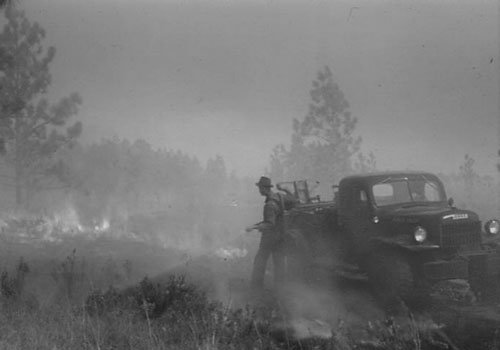
The Conservation and Recreation Land (CARL) Trust Fund (established in 1979) and the Florida Preservation 2000 Fund (established in 1990) made possible the purchase of additional public lands. Almost every year during this time period, additional lands were purchased, bringing the number of State Forests to 35. Included in these purchases was the Florida State Forests' 1 Millionth Acre, part of an addition to Cary State Forest purchased in 2006. These purchases established State Forest lands in over half of Florida's 67 counties.
2011
Florida State Forests mark their 75th anniversary. Over 1 million visitors annually enjoy a sense of space, solitude and self-reliance at Florida's State Forests through OHV riding, hunting, fishing, camping, paddling, hiking, biking, horseback riding, geocaching, swimming, picnicking and leisure driving. There are endless educational opportunities for visitors of all ages.
2016
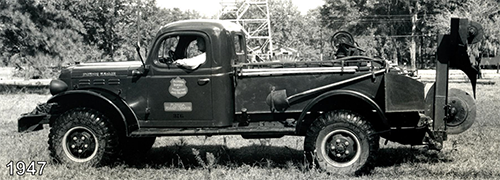
The Florida Forest Service celebrated 80 years of Florida State Forests with a Florida State Cabinet Resolution sponsored by FDACS and events throughout the state. Since its establishment in 1936, the Florida State Forest system has evolved and grown into one of the most extensive and well-managed State Forest systems in the nation, with 37 State Forests throughout Florida covering 1.1 million acres. Florida’s State Forests are a vital resource, providing an abundance of benefits, including clean air and water, diverse plant and animal communities, plentiful recreation opportunities and vast green spaces for aesthetics. They also generate $7.5 million in revenue annually from sustainably managed forest resources and recreational opportunities for more than 2.2 million visitors annually. To protect these vital resources, the Florida Forest Service uses sound forest management practices to keep its State Forests healthy, usable and sustainable now and into the future.
