Winter and spring are the seasons to enjoy one of Florida’s most prized food fish. Red snapper is in peak supply from December to June.
Red snapper (Lutjanus campechanus), found off both of Florida’s coasts, is harvested in waters 60 to 200 feet deep using large electrical or manually powered reels with multiple-hook rigs. Florida’s red snapper industry began in 1870 in Pensacola and is still important today. Red snapper is one of Florida’s most valuable fish species. Most Gulf red snapper is harvested in Okaloosa and Bay counties, and most Atlantic red snapper is harvested in Volusia and Duval counties.
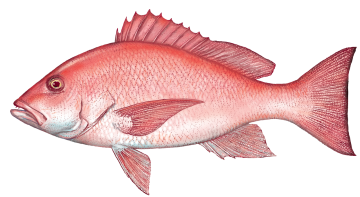
Adult red snappers are easily distinguished from other red-colored snappers; they are deeper bodied, not as streamlined, and have a bright red iris. The back and upper sides vary from pink to red, and the lower sides and belly are lighter in color.
Red snapper is a bottom dweller whose preferred habitat includes rocky ledges, ridges, and artificial reefs, including oil rigs. Juveniles commonly feed on zooplankton, while adults feed on a variety of small fish and crustaceans. Red snappers can live 50 years or more, and although their growth rate is relatively slow they can eventually weigh up to 30 pounds and reach three feet in length. They reach sexual maturity after age two and spawn between June and October.
Red snapper is a firm-textured fish with mild-tasting moist white flesh. It’s very versatile and responds well to a variety of cooking methods, including broiling, baking, steaming, poaching, frying, and grilling. Grilled red snapper is often served with lemon and melted butter, and baked red snapper tastes great with fresh herbs.
Remember to make your trip to the seafood market the last of your errands, and keep seafood cold during the trip home. When purchasing whole red snapper, look for a shiny surface with tightly adhering scales, clear eyes, and deep red or pink gills. The belly cavity should be clean and shiny without any cuts or protruding bones, and the fish’s aroma should be mild -- similar to that of the ocean. Fresh steaks and filets should have a translucent look and flesh that is firm and not separating. Be sure there is no discoloration and that the fish is packaged properly and not bent in an unnatural position.
Fresh red snapper should always be stored in the coldest part of the refrigerator and used within two days. Frozen red snapper should be used within six months. For the best product quality, always thaw frozen seafood in the refrigerator.
Keep raw and cooked seafood separate to prevent bacterial cross-contamination. After handling raw seafood, thoroughly wash knives, cutting surfaces, sponges, and your hands with hot soapy water. Since bacteria can multiply rapidly at room temperature, always marinate seafood in the refrigerator instead of on the kitchen counter. When the fish is done marinating, discard the marinade (never reuse it); it contains juices from the raw fish that may harbor bacteria.
Red snapper is highly nutritious food. It’s a good source of protein and also contains calcium, iron, and 0.36 grams of omega-3 fatty acids. A 4-ounce serving of uncooked snapper contains 1 gram of fat, no saturated fat, and 23 grams of protein.
Attributes
Firm texture, white meat with mild flavor. Lean fish.
Substitutes
Grouper, swordfish, tilefish, amberjack.
How Much to Buy
Whole or drawn fish: 3/4 to 1 pound per serving.
Dressed or cleaned fish: 1/2 pound per serving.
Fillets or steaks: 1/4 to 1/3 pound per serving.
Buying, Storage and Handling
Remember to purchase seafood last and keep it cold during the trip home.
Fresh whole fish should have:
- A shiny surface with tightly adhering scales.
- Gills that are deep red or pink.
- Clean shiny belly cavity with no cuts or protruding bones.
- A mild aroma, similar to the ocean.
Fresh steaks, fillets and loins should have:
- A translucent look.
- Flesh that is firm and not separating.
- A mild odor, similar to the ocean.
- No discoloration.
- Packaging that keeps them from being bent in an unnatural position.
Preparation
Keep raw and cooked seafood separate to prevent bacterial cross-contamination.
After handling raw seafood, thoroughly wash knives, cutting surfaces, sponges and your hands with hot soapy water.
Always marinate seafood in the refrigerator.
Discard marinade; it contains raw juices, which may harbor bacteria. When marinade is needed for basting, reserve a portion before adding raw seafood.
Cooking
The general rule is 10 minutes per inch of thickness, at the thickest part of the fillet or steak, at 400-450 degrees F.
If fish is cooked in parchment, foil or a sauce, add 5 minutes to the total cooking time.
Fillets less than 1/2 inch thick do not need to be turned during cooking.
Fish cooks quickly. Do not overcook.
Fish is done when the flesh becomes opaque and flakes easily when tested with a fork.
Poaching, steaming, baking, broiling, sauteing and microwaving are excellent low-fat cooking methods, if you do not add high-fat ingredients.
Marinate in your favorite salad dressing prior to cooking.
Broil, bake, steam or microwave, then cube and add to pasta or salad greens for a delicious salad.
Broil or grill with lime-butter and seasoned salt.
Oil the grill to prevent fish from sticking.
Bake whole fish with a crab or shrimp stuffing.
Add leftover fish in broken pieces to salads, soups or sauces.
Nutrition
Nutritional values for approximately 4 ounces (114 grams) of raw, edible portions:
- Calories From Fat: 10
- Total Fat: 1g
- Saturated Fat: 0g
- Cholesterol: 45mg
- Sodium: 50mg
- Total Carbohydrates: 0g
- Protein: 23g
- Vitamin A: 0%DV
- Vitamin C: 0%DV
- Calcium: 4%DV
- Iron: 0%DV
- Omega-3 Fatty Acid: 0.32g