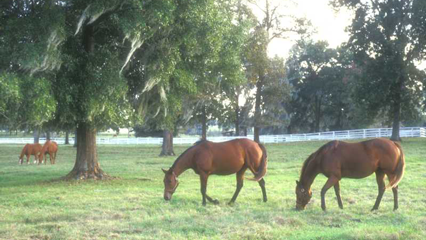
Learn about this mosquito-borne virus in horses.
West Nile virus (WNV) is a mosquito-borne virus first detected in the United States in the New York City area in 1999.
Since 1999, the virus has spread throughout the U.S. and Canada, infecting birds, humans, horses and other mammals.
As of 2014, more than 25,000 horses in the U.S. have been infected since the disease was first identified.
The virus is maintained in the wild bird population and is spread among birds by mosquitoes. Birds are considered the natural reservoir for WNV since high levels of the virus circulate in their bloodstream.
Mosquitoes acquire WNV in blood meals from infected birds and pass it on to other birds, animals and people.
Mosquitoes that feed on an infected horse or human have not demonstrated the ability to ingest enough of the virus to transmit it to other animals or humans; therefore, horses and humans are considered “dead-end hosts.”
The only vectors involved in the spread of WNV are mosquitoes.
Mosquitoes become infected when they feed on infected wild birds, which are the reservoir host.
The virus travels to, and replicates in, the mosquito’s salivary glands.
Infected mosquitoes can then transmit WNV to other birds, humans and mammals while taking a blood meal.
The virus is primarily circulated in nature through the mosquito-bird-mosquito cycle. However, under certain conditions, the virus spills into the equine and human populations.
Research has proven that horses and humans are not involved in the transmission cycle of WNV. Therefore, horses and people infected with WNV are known as dead-end hosts and are not considered a threat to other horses or humans.
West Nile virus may cause a wide range of clinical illness ranging from mild “flu-like” signs to encephalitis (inflammation of the brain) that may be fatal to both humans and horses.
Clinical signs may include fever, incoordination (especially of the rear limbs, causing stumbling and falling), generalized weakness, muscle twitching, seizures, coma, drooping lips or lip smacking, head drooping, teeth grinding, inability to rise, and hypersensitivity to touch or sound.
While horses are susceptible to WNV infection, many infected horses do not develop clinical illness and recover uneventfully.
Any horse displaying abnormal behavior or neurologic signs should be examined by a veterinarian to rule out neurologic diseases, such as WNV, equine herpesvirus-1, equine protozoal myeloencephalopathy, Eastern/Western encephalomyelitis and rabies.
Blood samples should be collected by a veterinarian and sent for diagnostic testing.
The WNV IgM capture ELISA test is a specific test that detects acute WNV infection in animals, is usually positive within six days postinfection and can remain positive for up to two months postinfection.
A positive WNV IgM capture ELISA test is indicative of recent infection.
Unexposed animals vaccinated at least three weeks prior to testing will test negative on the WNV IgM capture ELISA test.
Currently, there is no specific treatment for WNV.
Supportive care includes administration of anti-inflammatory drugs and intravenous fluids.
Recumbent WNV positive horses are at a higher risk of dying or requiring euthanasia.
For horses exhibiting clinical signs of WNV, the case fatality rate is approximately 33 percent. However, many infected horses will fully recover following infection.
Vaccination and mosquito control minimize the risk of WNV infection in horses.
Although the number of WNV-infected horses has declined over the last five years, WNV remains an important disease in unvaccinated horses.
The American Association of Equine Practitioners recommends incorporation of the WNV vaccine as an annual core vaccine in equine vaccination protocols.
Horse owners should consult with their veterinary practitioner to ensure current WNV vaccination status of their horses.
Minimizing horse exposure to mosquitoes during the peak mosquito feeding periods at dawn and dusk decreases the risk of horse exposure to WNV.
Application of mosquito repellant can also effectively reduce the number of mosquito bites on horses.
Mosquito control efforts to eliminate mosquito breeding sites are also important. Methods to reduce mosquito breeding sites include:
West Nile virus is a reportable disease for the equine population in Florida.
WNV surveillance includes testing samples from dead birds, sentinel chickens, mosquito pools, horses and humans.
The Florida Department of Agriculture and Consumer Services (FDACS) works with federal, state and local health and agricultural agencies to minimize the impact of WNV on the equine industry.
FDACS confirms suspect equine WNV cases, maintains horse surveillance data, and educates horse owners on WNV disease control and prevention.
Collaborating agencies use the surveillance information to focus on disease control efforts such as mosquito fogging.
To report a suspected or known case of WNV in your horse, please contact the State Veterinarian’s Office by calling (850) 410-0900 from 8 a.m. to 5 p.m., Monday through Friday. For after-hours reporting, call 1-800-342-5869 or email RAD@FDACS.gov.