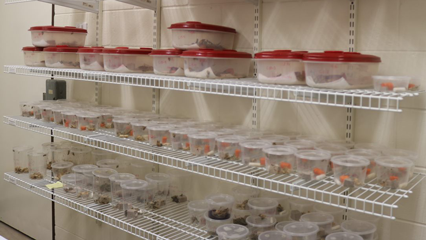
The Technique Development Section conducts research for the Florida Department of Agriculture and Consumer Services' Division of Plant Industry (FDACS-DPI) surrounding the eradication or management of new and invasive pests in Florida.
On this page:
Yellow-Legged Hornet Research | Tomato Leafminer Research
Yellow-Legged Hornet Research
The yellow-legged hornet, Vespa velutina (Hymenoptera: Vespidae), is a social wasp native to Southeast Asia. While it is a generalist predator, it can be a significant predator of honey bees where the hornet is non-native.
In 2023, the yellow-legged hornet was discovered first in Georgia and later in South Carolina. FDACS-DPI is taking preventative measures, collaborating with Georgia and South Carolina officials on monitoring and control techniques. Technique Development is researching several trapping systems, as well as life- stage analysis of the U.S. yellow-legged hornet population. This information will help us determine the reproductive timing and population dynamics throughout the season to better inform our monitoring efforts.
Yellow-Legged Hornet
Adult hornets are approximately 1 inch long and have a narrow waist. The bottom half of the leg is yellow, but this is not a distinguishing feature of the species because many wasps and hornets have yellow legs. Colors and patterns on the body can vary, but it has a solid orange face, especially when compared to other wasps and hornets that have black markings (FDACS-P-02201,10/23).
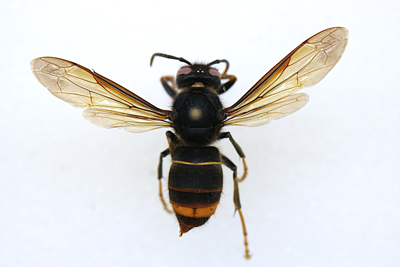
Adult yellow-legged hornet. Photo: Sara Brennan, FDACS-DPI
Like most hornets and wasps, yellow-legged hornet colonies have an annual life cycle (Monceau et al., 2014). A single, mated queen overwinters in the soil or dead wood (Van Itterbeeck et al., 2021). In the spring, she emerges to build an “embryo nest” and new colony. As a yellow-legged hornet colony grows, workers will build a larger or new “primary nest” for the colony. As the colony grows even bigger, the colony will build and move to a “secondary nest” built much higher in the tops of trees. In the fall, the colony will produce male “drones” and female “gynes” that mate, and the subsequent newly mated queens disperse to overwinter. Yellow-legged hornets are incredibly fecund, producing more than 13,000 individuals and 900 gynes per nest (Diéguez-Antón et al., 2022; Rome et al., 2011; Van Itterbeeck et al., 2021).
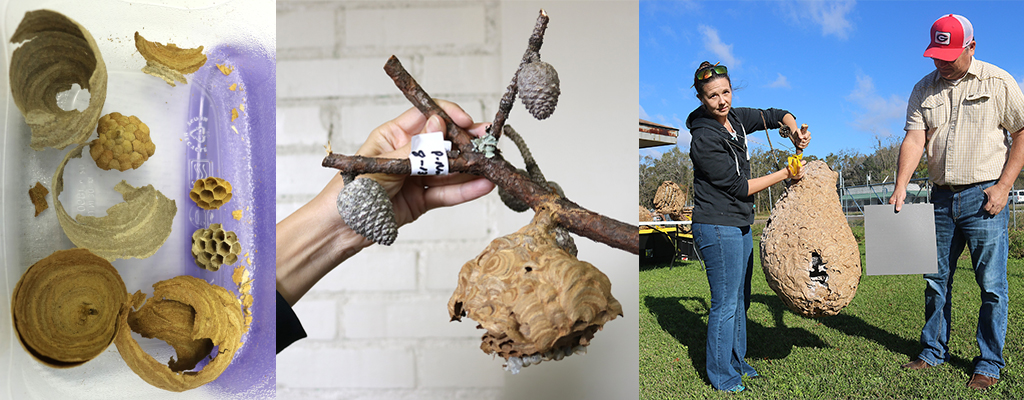
Left: Embryo nests. Center: Primary nest. Right: Secondary nest. Photos: James Snyder, FDACS-DPI
Yellow-legged hornet is native to several countries in Asia, including Central to Southern China (Rome et al., 2011). The first reporting of yellow-legged hornet in Europe was in France in 2004, and it has since spread to 11 other European countries. In August 2023, yellow-legged hornet was found near Savannah, Georgia. In November 2023, the first yellow-legged hornet was detected in a trap in South Carolina.
This is a serious pest that could have devastating impacts on the U.S. honey-bee industry and the growers who rely on honey-bee pollination. For example, since the first reporting of yellow-legged hornet in France in 2004, the country has reported colony losses between 30% and 80% (Laurino et al., 2019). When preying on honey bees, the yellow-legged hornet demonstrates a specialized hunting behavior, often referred to as “hawking,” in which hornets will simply hover outside honey-bee hives to catch individual bees as they leave or return to their home.
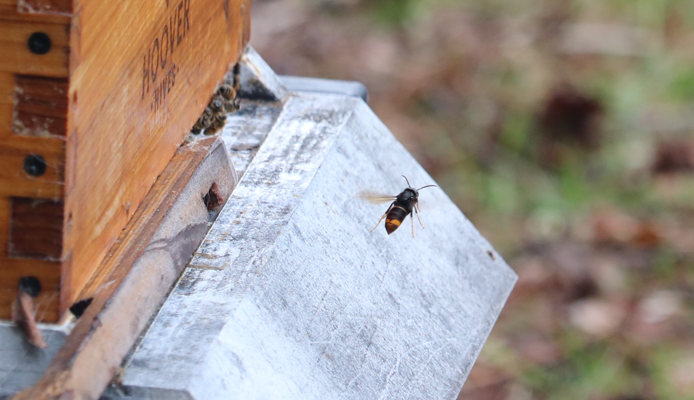
Yellow-legged hornet “hawking” outside a honey bee hive. Photo: James Snyder, FDACS-DPI
Currently, trapping is the main method of detection employed in the U.S. There are mass-capture traps used for monitoring and live-capture traps used to track and locate nests. Unfortunately, yellow-legged hornet nests are difficult to locate because their color and structural features camouflage into both natural and urban settings. Even when an approximate area can be identified, nests can be difficult to pinpoint as they can occur in treetops, under foliage, or in sheltered recesses. Mass-capture traps have been criticized in Europe for catching ecologically important non-target species from multiple taxa. Additionally, mass-capture traps may weaken wasp colonies by targeting and capturing workers, but they do not target the queen or interrupt their reproduction cycle. Given their fecundity, identifying and eliminating nests before foundress dispersal is crucial for stopping or limiting the spread of this insect.
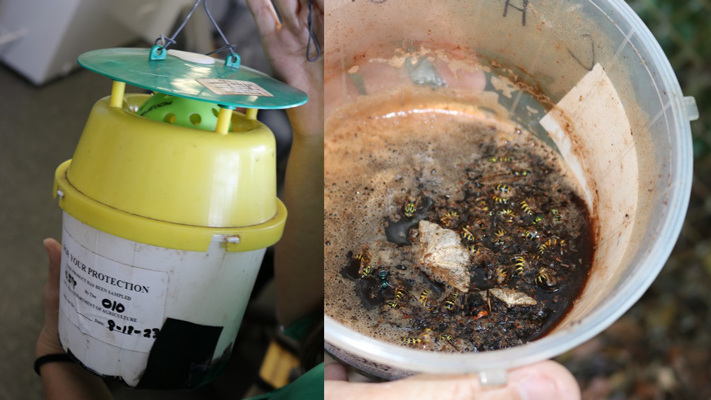
Mass-capture trap. Photos: James Snyder, FDACS-DPI
Research
Research is ongoing to improve monitoring, detection, and control tools for yellow-legged hornet to assist eradication efforts in Georgia and South Carolina and to be prepared if it enters Florida. Collaboration with European scientists and officials who have experience with yellow-legged hornet is key to improving survey and trapping techniques, nest tracking software, regulatory approaches, and current control strategies.
Current efforts include developing and testing traps and exploring the attractiveness of lures and baits to workers, males and queens. In addition, we will examine and analyze samples to understand the life cycle and reproductive patterns of the hornets. This information will aid in risk assessment and decision-making.
Notes From the Lab
We are exploring the best methods for finding yellow-legged hornet nests to remove them. Nests are often in cryptic areas or high in treetops where they are difficult to locate. Capturing and tracking workers back to their nest is one method of locating nests.
One tracking method we have explored is harmonic radar, where a transceiver (transmitter) sends an intermittent signal to a reflecting object (the tag on an insect), which sends back the signal to the transceiver (receiver). Tags and transceivers are lightweight and relatively inexpensive; however, their detection range is limited and is sensitive to landscape complexity. A UV-hardening glue is used to adhere the tags to the insect body. After training with collaborators in Hawaii using yellow jackets, our lab was able to put together tags and test the system in Georgia and South Carolina. While the training worked well with yellow jackets in Hawaii, which were tracked 20-80 yards away from the release site, harmonic radar did not range far enough to track the yellow-legged hornet. However, the UV-hardening glue worked very well in attaching heavier radio telemetry tags to the hornets. Tests in Georgia using this method were able to track a hornet more than 980 yards from the release site. This tracking information was helpful in finding a nearby nest the following week. With radio telemetry, a battery-powered transmitter (the tag on the insect) constantly sends a signal to an antenna and a receiver. Radio telemetry tags are not often reusable and more costly than harmonic radar tags, but radio telemetry has a better detection range and is more effective in dense landscapes. Radio telemetry is a candidate for tracking yellow-legged hornets and something we will be working to develop.
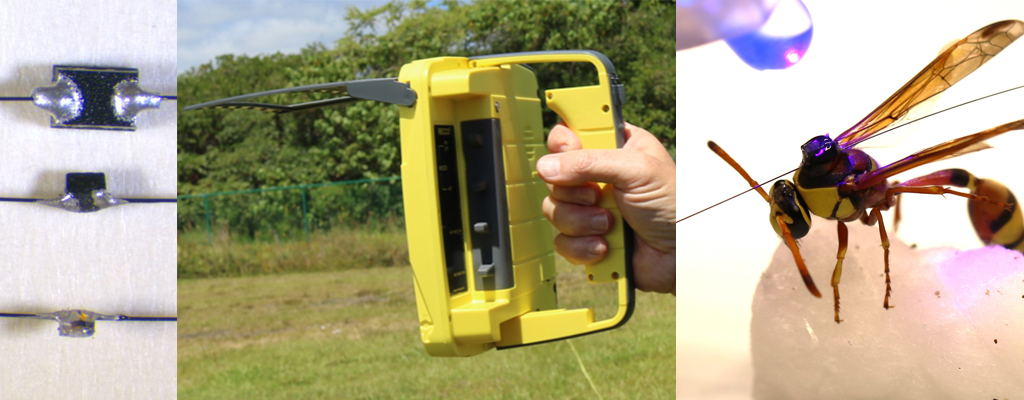
Left: Harmonic radar tags. Center: Transceiver used in harmonic radar. Right: Attaching a harmonic radar tag to a yellow jacket using a UV-hardening glue. Photos: James Snyder, FDACS-DPI
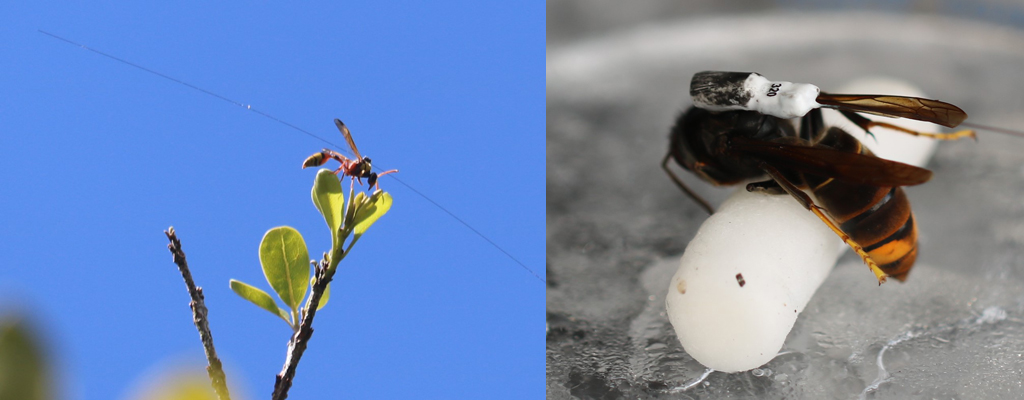
Left: Tracking a yellow jacket in Hawaii with harmonic radar. Right: Radio telemetry tag successfully attached using UV-hardening glue. Photos: James Snyder, FDACS-DPI
References
Cheng, Y.N.; Wen, P.; Tan, K.; Darrouzet, E. (2022). Designing a sex pheromone blend for attracting the yellow-legged hornet (Vespa velutina), a pest in its native and invasive ranges worldwide. Entomologia Generalis, 42: 523-530.
Diéguez-Antón, A., Escuredo, O., Seijo, M. C., & Rodríguez-Flores, M. S. (2022). Embryo, Relocation and Secondary Nests of the Invasive Species Vespa velutina in Galicia (NW Spain). Animals, 12(20), 2781. https://doi.org/10.3390/ani12202781
Laurino, D., Lioy, S., Carisio, L., Manino, A., & Porporato, M. (2020). Vespa velutina: An Alien Driver of Honey Bee Colony Losses. Diversity, 12(1), 5. https://doi.org/10.3390/d12010005
Monceau, K., Bonnard, O. & Thiéry, D. (2014). Vespa velutina: a new invasive predator of honeybees in Europe. J Pest Sci 87, 1–16. https://doi.org/10.1007/s10340-013-0537-3
Rome, Q., Perrard, A., Muller, F., & Villemant, C. (2011). Monitoring and control modalities of a honeybee predator, the yellow-legged hornet Vespa velutina nigrithorax (Hymenoptera: Vespidae). Aliens, 31(31), 7-15.
Van Itterbeeck, J., Y. Feng, M. Zhao, C. Wang, K. Tan, T. Saga, K. Nonaka, C. Jung. (2021). Rearing techniques for hornets with emphasis on Vespa velutina (Hymenoptera: Vespidae): A review. Journal of Asia-Pacific Entomology, 24(2): 103-117. https://doi.org/10.1016/j.aspen.2021.03.009
Tomato Leafminer Research
The tomato leafminer, Phthorimaea absoluta (formerly Tuta absoluta) (Lepidoptera: Gelechiidae), is native to South America but has spread to several countries in Europe, Africa, Asia, Central America, and the Caribbean (Desneux et al., 2011; Lobos et al., 2013; MALF, 2022; Verheggen and Fontus, 2019). The introduction and establishment of this pest is a serious threat to U.S. tomato production areas and tomato trade. Research is ongoing to develop a non-sticky, “dry” trap for monitoring the tomato leafminer that can make specimen processing of small moths more efficient.
Tomato Leafminer
The tomato leafminer is a moth species whose adults are visually similar to many other microlepidoptera. Adults can grow up to 6 mm long and have a gray and brown coloration, black spots on the anterior wings, and thin, threadlike antenna (UCANR, 2016; Hayden et al., 2013). The larvae of the species are white, cream or yellow after hatching and turn green or pink with a black or brown band near the head as they feed and progress through instars (UCANR, 2016; Hayden et al., 2013). It is possible to see them mining through leaves or fruit, where they will deposit silk cocoons and frass (UCANR, 2016; Hayden et al., 2013). After pupating in the soil or leaves, they turn from green to dark brown (UCANR, 2016; FDACS, 2013).
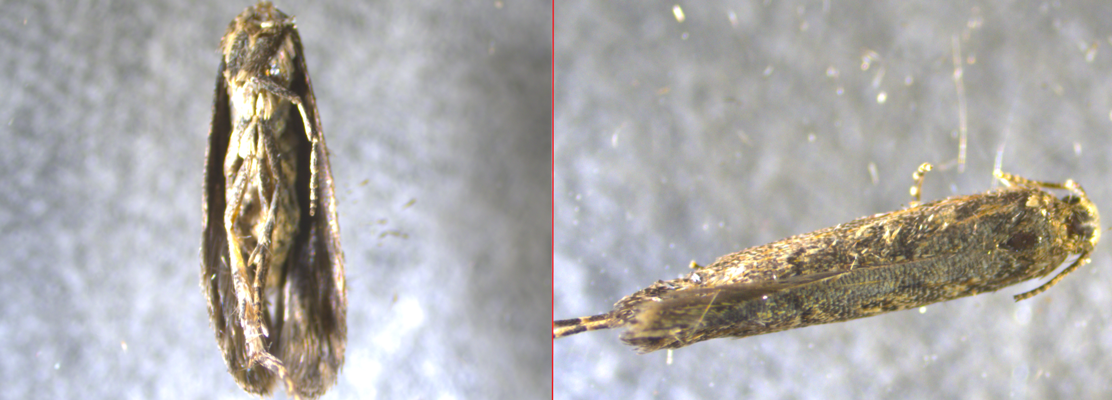
Adult tomato leafminer. Photos: Jelani Freeman, FDACS-DPI
The species primarily targets tomato plants but will also feed on and utilize other solanaceous (nightshade) plants such as eggplants and peppers as hosts (Desneux et al., 2010). Larvae feed mainly internally on leaves, stems, shoots and fruit. This pest causes the greatest impact when it feeds on commercial fruit, resulting in reduced growth and decreased fruit yield, and renders the produced fruit unmarketable. Without adequate control measures, the tomato leafminer has the potential to cause 90-100% production loss (Barrientos et al.,1998; Desneux et al., 2011; Tropea Garzia et al., 2012).
Control methods are limited and mainly include insecticides. However, the tomato leafminer can develop resistance to insecticides quickly because of its short life cycle (UCANR, 2016). Biological control using parasitic wasps, which target the larvae, can aid in preventing feeding damage and help control populations (Koller et al., 2024). With limited control options available, monitoring and expedient eradication efforts are the best option to combat this pest.
Currently, the approved monitoring method under the Cooperative Agricultural Pest Survey (CAPS) program for adult tomato leafminers in the United States is pheromone-baited plastic delta traps (CAPS, 2023). A hot-melt glue-coated square of cardstock is inserted into the delta trap. Flying moths attracted by the lure are then captured on the insert. While this widely used trapping method is effective for detection of the moth, the sticky material can make it difficult to remove and identify suspect specimens, which must be removed from the insert by using a solvent. Additionally, moths can lose their scales while struggling in the trap, making it difficult to distinguish from similar small-sized non-target moths (Miller et al.,1993). The final species determination is based on genitalia dissected from moths once they have been removed from the sticky inserts (Roda et al., 2015). The survey programs for tomato leafminer would benefit from having an alternative trapping method that can make specimen processing of small moths more efficient. Having the best monitoring tool is very important to quickly implement quarantines and control efforts after detection. These will provide the best opportunity to protect a prominent agricultural crop from a pest which spreads rapidly and is difficult to control once established.
Research
Research is ongoing to develop and test a non-sticky, “dry” trap for monitoring the tomato leafminer as an alternative to the standard plastic delta trap. Our goal is to produce a monitoring tool which effectively:
- Maintains moth entry and retention,
- Improves the quality of moths caught, such that wing colorization needed for identification is still visible in collected samples, and
- Maintains sample quality after the typical two-week field deployment interval.
Because the tomato leafminer is a quarantine pest not present in Florida, we conduct preliminary tests with a surrogate species, Keiferia lycopersicella (Lepidoptera: Gelechiidae), commonly called tomato pinworm. Tomato pinworms are native to Florida and share many qualities with tomato leafminers, including a preference for tomato plants as hosts, general morphology, similar day/night activity patterns, and attraction to the tomato leafminer pheromone lure.
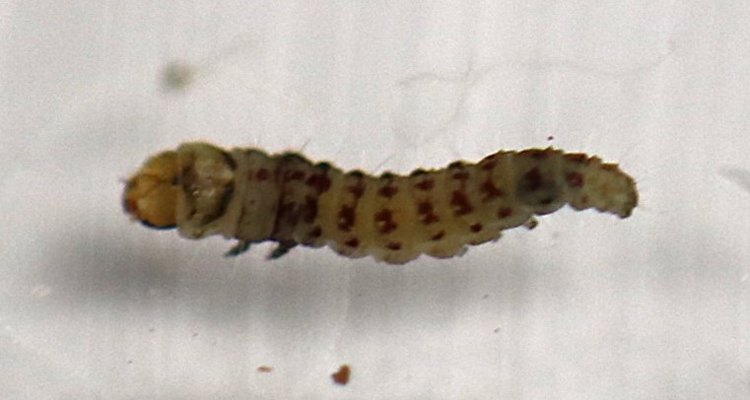
Tomato pinworm larva. Photo: Katrina Dickens, FDACS-DPI
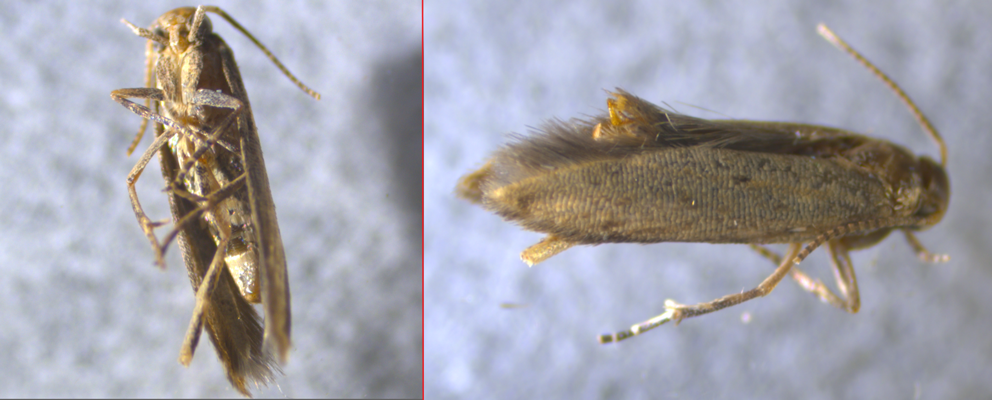
Adult tomato pinworm. Photos: Jelani Freeman, FDACS-DPI
All trap prototypes are first tested for waterproofing, since water intrusion will rot any moths caught and make them difficult to identify. Once determined waterproof, trap prototypes are tested with tomato pinworms in lab, greenhouse, and field cage assays. Many of our trap prototypes are modifications of a commercial green-yellow-white bucket trap, commonly used for trapping lepidoptera. Prototypes that pass waterproofing and laboratory screening are tested against the unmodified bucket trap and Delta traps in field cages in Florida. Prototypes are also tested in Florida with dead tomato leafminers to ensure specimens maintain characteristics for identification after two to three weeks of deployment. Our most promising trap prototypes are sent to the Contained Research Facility at the University of California, Davis, to be tested in a quarantine laboratory with live tomato leafminers.
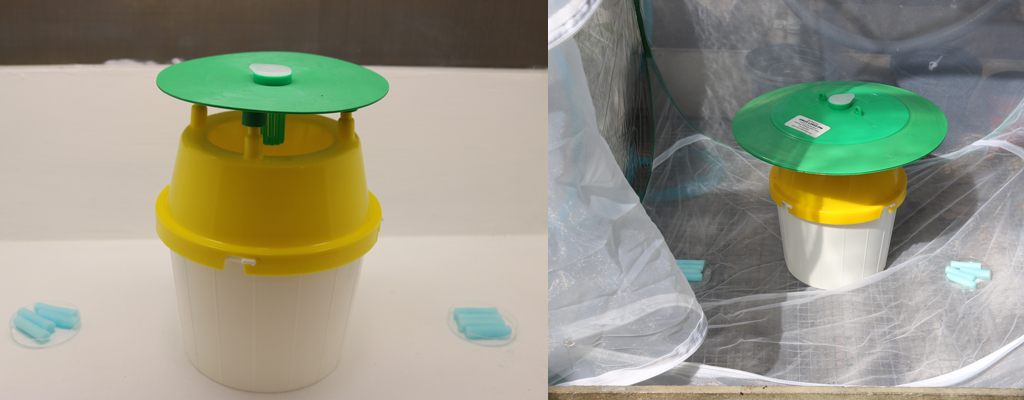
Right: Lab trap testing with bucket trap larva. Left: Greenhouse trap testing. Photos: Jenali Freeman, FDACS-DPI
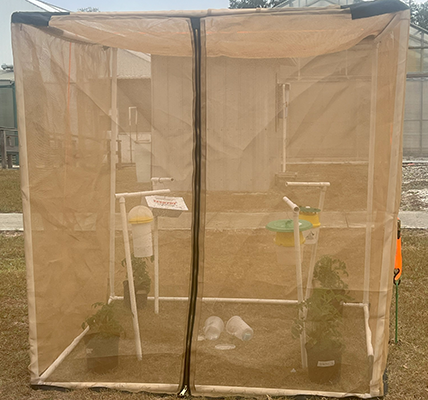
Field-cage testing. Photo: Jelani Freeman, FDACS-DPI
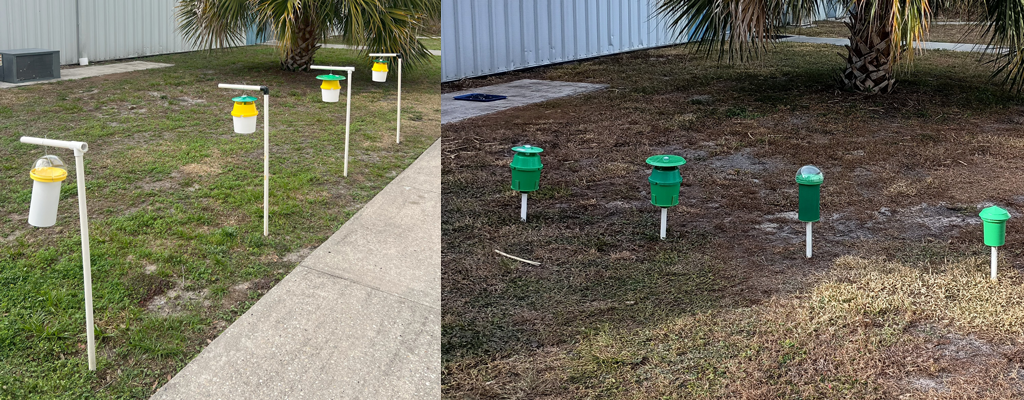
Right: Waterproof testing. Left: Preservation testing. Photos: Jelani Freeman, FDACS-DPI.
Notes From the Lab
Moths are reared on tomato and eggplants inside wooden cages under artificial light. Cages consist of six cheater-gallon pots containing three to four plants each. Plants used are 1-2 feet tall. Larvae are left to mine, usually killing all the leaves, and pupate in the soil. Adult cages and testing cages include vials or petri dishes filled with Gatorade and cotton wicks as an effort to lengthen the lifespan of the moths after eclosion.
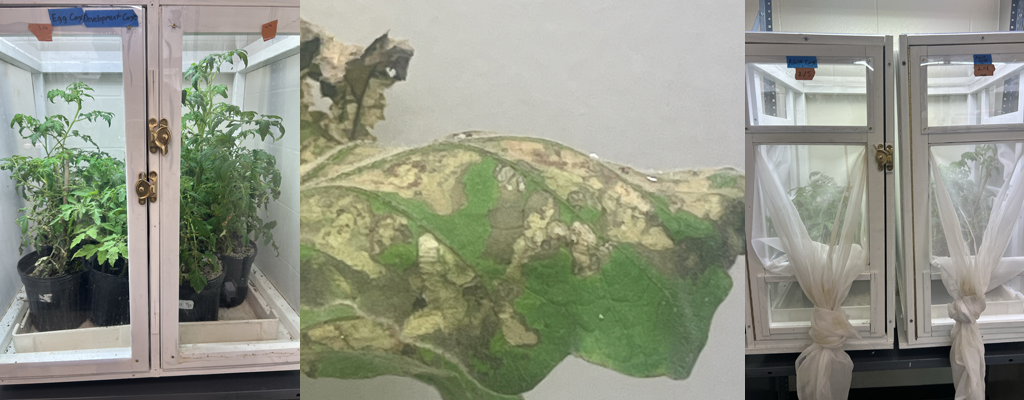
Left: Egg-laying cage. Center: Pinworm mines on a leaf. Right: Adult cage. Photos: Jelani Freeman, FDACS-DPI
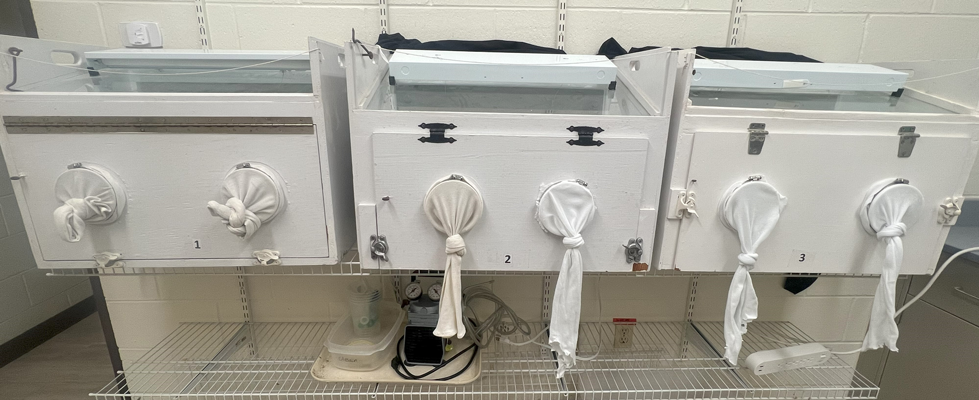
Test cages. Photo: Jelani Freeman, FDACS-DPI
References
Barrientos, R.E., Apablaza, J., Norero, A., & Estay, P. (1998). Temperatura base y constante térmica de desarrollo de la polilla del tomate, tuta absoluta (lepidoptera: gelechiidae). Ciencia E Investigacion Agraria, 25, 133-137.
CAPS, 2023. 2024 Approved Methods for National Priority Pests. Cooperative Agricultural Pest Survey (CAPS) program. Purdue University. https://approvedmethods.ceris.purdue.edu/
Desneux, N., Wajnberg, E., Wyckhuys, K. A. G., Burgio, G., Arpaia, S., Narváez-Vasquez, C. A., González-Cabrera, J., Catalán Ruescas, D., Tabone, E., Frandon, J., Pizzol, J., Poncet, C., Cabello, T., & Urbaneja, A. (2010). Biological invasion of European tomato crops by Tuta absoluta: ecology, geographic expansion and prospects for biological control. Journal of Pest Science, 83(3), 197–215. https://doi.org/10.1007/s10340-010-0321-6
Desneux, N., M.G. Luna, T. Guillemaud, and A. Urbaneja. 2011. The invasive South American tomato pinworm, Tuta absoluta, continues to spread in Afro-Eurasia and beyond: the new threat to tomato world production. Journal of Pest Science 84: 403-408.
(FDACS) Florida Department of Agriculture and Consumer Services, Division of Plant Industry. (2013). Tomato Leafminer, Tuta absoluta (Meyrick) (Lepidoptera: Gelechiidae), a devastating pest of tomatoes. DACS-P-01844. https://ccmedia.fdacs.gov/content/download/103988/file/TomatoLeafminer_1844.pdf [ Adobe PDF Document ]
Koller, J., Jérémy, G., Norgrove, L., Arnó, J., Sutter, L., & Collatz, J. (2024). A parasitoid wasp allied with an entomopathogenic virus to control Tuta absoluta. Crop Protection.
Lobos, E., M. Occhionero, D. Werenitzky, J. Fernandez, L. Gonzalez, C. Rodriguez, C. Calvo, G. Lopez, and A. Oehlschlager. 2013. Optimization of a trap for Tuta absoluta Meyrick (Lepidoptera: Gelechiidae) and trials to determine the effectiveness of mass trapping. Neotropical Entomology 42(5): 448-457.
MALF. 2022. Report of Tuta absoluta in Trinidad. Ministry of Agriculture Land and Fisheries (MALF), Government of the Republic of Trinidad and Tobago, https://www.ippc.int/en/countries/trinidad-and-tobago/pestreports/2022/07/report-of-tuta-absoluta-in-trinidad/
Millerz, R.S., Waltz, R.D., & MastroS, V. (1993). Insect Removal From Sticky Traps Using A Citrus Oil Solvent. Entomological News, 104, 209-213.
Roda, Amy L et al. “Efficiency of Trapping Systems for Detecting Tuta absoluta (Lepidoptera: Gelechiidae).” Journal of economic entomology vol. 108,6 (2015): 2648-54. doi:10.1093/jee/tov248
Tropea Garzia, G., G. Siscaro, A. Biondi, and L. Zappalà. 2012. Tuta absoluta, a South American pest of tomato now in the EPPO region: biology, distribution and damage. EPPO Bulletin 42(2):205-210.
(UCANR) University of California, Agriculture and Natural Resources. (2016). South American Tomato Leafminer, Tuta absoluta: A serious Threat to California. https://ipm.ucanr.edu/legacy_assets/pdf/pestalert/tuta-absoluta.pdf [ Adobe PDF Document ]
Verheggen, F., and R. B. Fontus. 2019. First record of Tuta absoluta in Haiti. Entomologia Generalis 38(4): 349-353.