See an overview of regulations for agricultural products brought into Florida from other states and countries.
All plants, trees, shrubs, vines, bulbs, cuttings, grafts, scions or buds, grown or kept for or capable of propagation or distribution, unless specifically excluded by the rules of the department.
Non-commercial shipments of (homeowner) plants that are part of a passenger's baggage or household effects may enter the state provided the plants are accompanied by a certificate of inspection. These plants would include non-commercial shipments of plants grown indoors and outdoors. Should the plants originate from a state that does not offer an inspection and certification service for house plants, the owner must be able to furnish the department a Florida address where the plants will be located. This information will enable the department to conduct a follow-up inspection if deemed necessary. If sufficient information is given, the plants will be allowed entry.
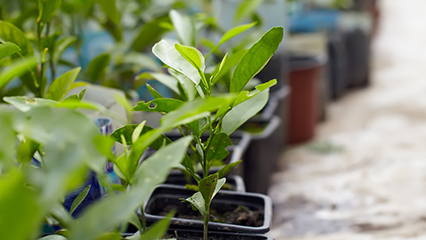
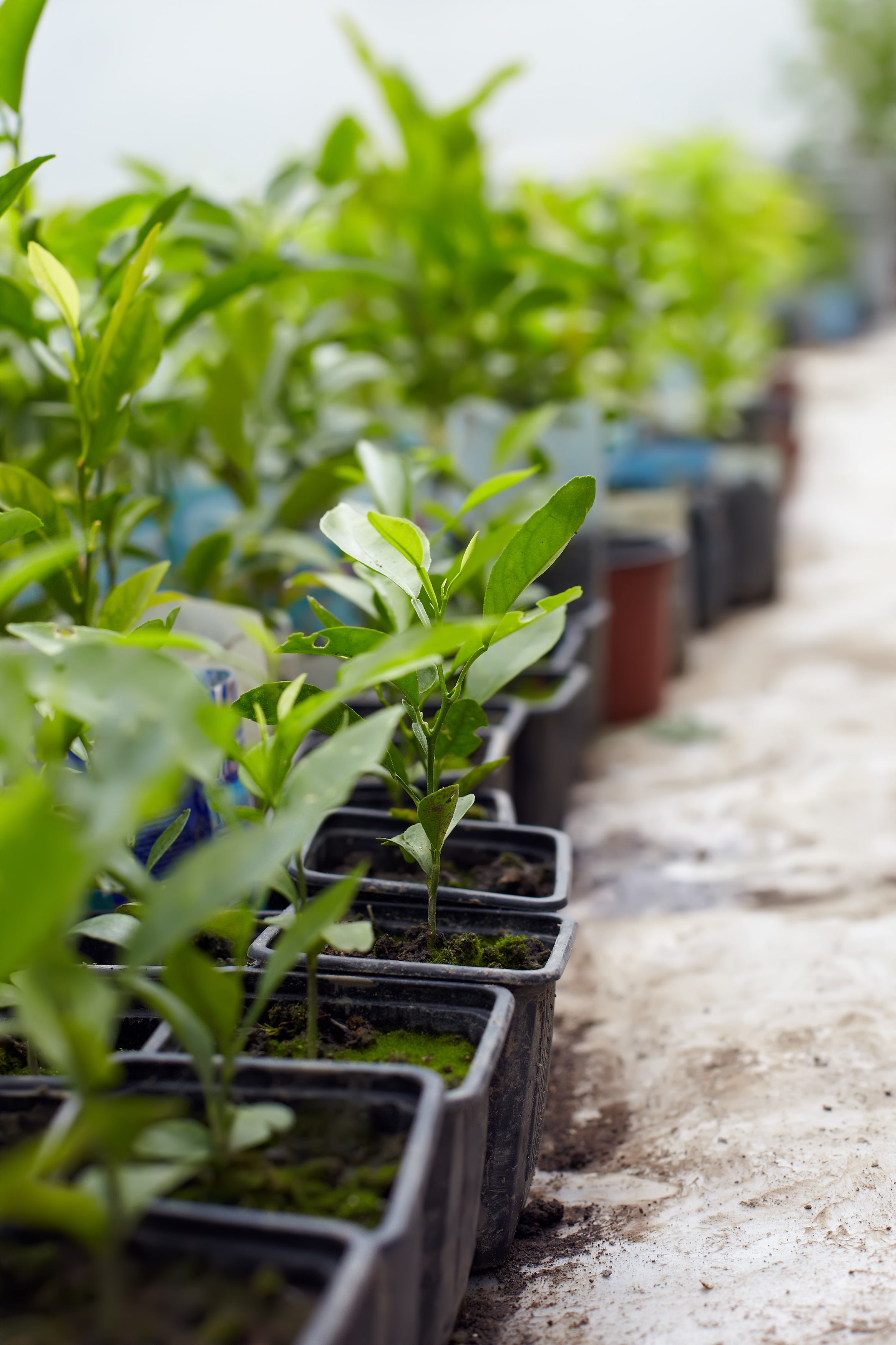
NOTE: It is unlawful to move into Florida any and all kinds of citrus trees and parts thereof except by a special permit from the division director. Permits are not required to move citrus fruits into the state.
Any person, nurseryman, stock dealer, agent or plant broker who desires to ship into this state nursery stock from any state, territory or district of the United States, shall comply with the following regulations:
The nurseryman, stock dealer, agent or plant broker must be listed in the latest directory of registered or certified nurseries, agents, stock dealers and plant brokers of the state where such nursery stock originated.
A valid certificate of inspection must be attached to each separate package, bundle, box or shipment of nursery stock shipped into Florida. In club orders, one tag must be attached to each individual order and another to the package containing the individual orders.
All shipments of nursery stock entering peninsular Florida by road are required to stop at an agricultural inspection station where they will be screened for proper certification and subject to cargo inspection by the Department. Each shipment shall be accompanied with a bill of lading, or other valid documentation which contains the following information:
Definition: Any living stage, including, but not limited to, seeds and reproductive parts, of a parasitic or other plant of a kind, or subdivision of a kind, which may be a serious agricultural threat in Florida as listed in Rule 5B-57.007, as well as those plants identified by the USDA as noxious weeds under CFR 360 .200 (b) and (c).
It is unlawful to introduce, possess, move, or release any plant pest or noxious weed regulated by the Department and the USDA except under permit issued by the Department or the USDA. No permit shall be issued unless the Department has determined that procedures exist to adequately contain the plant pest or noxious weed or that it will not pose a threat to the agricultural industry or the environment.
| Pest | States Regulated | Material Regulated |
|---|---|---|
| Aquatic plant species not native to the state of Florida | ALL | Aquatic plants |
Restrictions: No person shall import into the state any aquatic plant or seed thereof of a species not native to the state without having first obtained a permit from the Florida Department of Environmental Protection (DEP), Bureau of Invasive Plant Management, 3900 Commonwealth Blvd., MS 705, Tallahassee, FL 32399, Telephone: (850) 488-5631
| Pest | States Regulated | Materials Regulated |
|---|---|---|
| All injurious insects, plant diseases or disorders of citrus | ALL | Any and all kinds of citrus plants and parts thereof |
Restrictions: It is unlawful to move into Florida any and all kinds of citrus trees and parts thereof except by a special permit from the Division Director. Permits are not required to move citrus fruits into the state. Federal Domestic Quarantines regulate the interstate movement of fruit from areas known to harbor fruit flies injurious to citrus.
| Pest | States Regulated | Materials Regulated |
|---|---|---|
| Dogwood anthracnose | AL, CT, DE, GA, ID, MD, MA, NJ, NY, NC, OR, PA, SC, TN, VA, WA, WV and any other state where dogwood anthracnose is determined to be established | A dogwood plant (Cornus spp.) or part thereof or any other plant or part thereof which is capable of harboring or transporting dogwood anthracnose in any of its life stages |
Restrictions: The movement of dogwood plants or part thereof from infested states into Florida is prohibited except by master permit issued by the Division Director.
| Pest | States Regulated | Materials Regulated |
|---|---|---|
| Boll weevil, Anthonomus grandis | ALL | Any article including but not limited to cotton plants, seed cotton, gin trash, and equipment capable of transporting or harboring boll weevil or the insect itself |
Restrictions: Regulated articles from infested areas may enter Florida provided each shipment is accompanied by a certificate issued by and bearing the signature of an authorized inspector of the state of origin, certifying that such regulated articles were treated as recommended by the department.
| Pest | States Regulated | Materials Regulated |
|---|---|---|
| Fruit flies (Anastrepha spp. (except A. suspensa), Bactocera spp., Dacus spp., Rhagoletis spp., and Ceratitis spp. | All areas infested | All host fruit which is known to be or found to be a host or articles that may be infested of any fruit flies listed |
Restrictions: Prohibited into the state of Florida unless accompanied by a certificate issued by an authorized representative of the USDA or the state of origin denoting the absence of fruit flies listed above, or having complied with a treatment established by the department or USDA to ensure freedom from fruit flies.
| Pest | States Regulated | Materials Regulated |
|---|---|---|
| Lettuce mosaic virus | ALL | Lettuce seed and plants |
Restrictions: Lettuce seed and/or plants moved into, sold or planted in a commercial lettuce production area in Florida shall be certified as having been tested for lettuce mosaic virus by a testing facility approved by the Division of Plant Industry.
| Pest | States Regulated | Materials Regulated |
|---|---|---|
| Oak wilt disease | AR, IL, IN, IA, KS, KY, MD, MI, MN, MO, NE, NY, NC, OH, OK, PA, SC, TN, TX, VA, WV, WI and any other state where oak wilt is determined to be established | Rooted trees and seedling plants of oak (Quercus spp.), chestnut (Castanea spp.), chinquapin (Castanopsis spp.) and tanbark oak (Lithocarpus densiflora), and any parts of such plants for propagation, except seed |
Restrictions: The movement of oak wilt disease or host plants into the state from an infested or regulated area is prohibited except by master permit issued by the Division Director. The movement of firewood with bark and unpeeled lumber into the state from an infested or regulated area is prohibited except by a certificate issued by an authorized representative of the state of origin. The certificate shall state that these regulated articles have been treated in a manner approved by the Department to minimize risk of inadvertent introduction of oak wilt disease.
| Pest | States Regulated | Materials Regulated |
|---|---|---|
| Seed potatoes offered for sale in Florida must not exceed the tolerances indicated for the following plant pests: nematode and tuber moth injury, 0%; bacterial ring rot, 0%; blackleg, 1%; Fusarium rot (damage by), 1%; soft rot or wet breakdown, 1%; varietal mixture, .25%; late blight, 1%; and any other dangerous pest of potatoes not listed, 0%. Must also meet requirements for external and internal defects as provided by U.S. Standards for Grades of Seed Potatoes (37 F.R. 8667). | ALL | Seed potatoes |
Restrictions: (1) All potatoes to be sold for propagation in Florida must meet U.S. No. 1 seed potato requirements as set forth in the U.S. Standards for Grades of Seed Potatoes (37 F.R. 8667). (2) All potatoes to be sold for seed in Florida must have been grown under a seed potato certification program of the state or country of origin, and each bag must be accompanied by a certificate issued by the agency administering the seed potato certification program. (3) The department shall have the authority to open any shipment of seed potatoes for inspection and to draw a reasonable sample from any bag of seed potatoes for laboratory examination or for planting for field observation.
| Pest | States Regulated | Materials Regulated |
|---|---|---|
| AZ, CA, OR, TX, WA, NM, HI | Any plant, plant product or other regulated article capable of transporting or harboring plant-feeding snails |
Restrictions: Regulated articles from infested states may move into Florida provided they have been inspected by authorized officials of the state of origin and each shipment is accompanied by an original special certificate stating that the articles have been inspected and meet Florida's requirements.
| Pest | States Regulated | Materials Regulated |
|---|---|---|
| All species of the genus Saccharum | ALL | Propagative parts of sugarcane, including all species of the genus Saccharum |
Restrictions: The movement of propagative parts of sugarcane into the state of Florida is prohibited unless accompanied by a special permit issued by the Department.