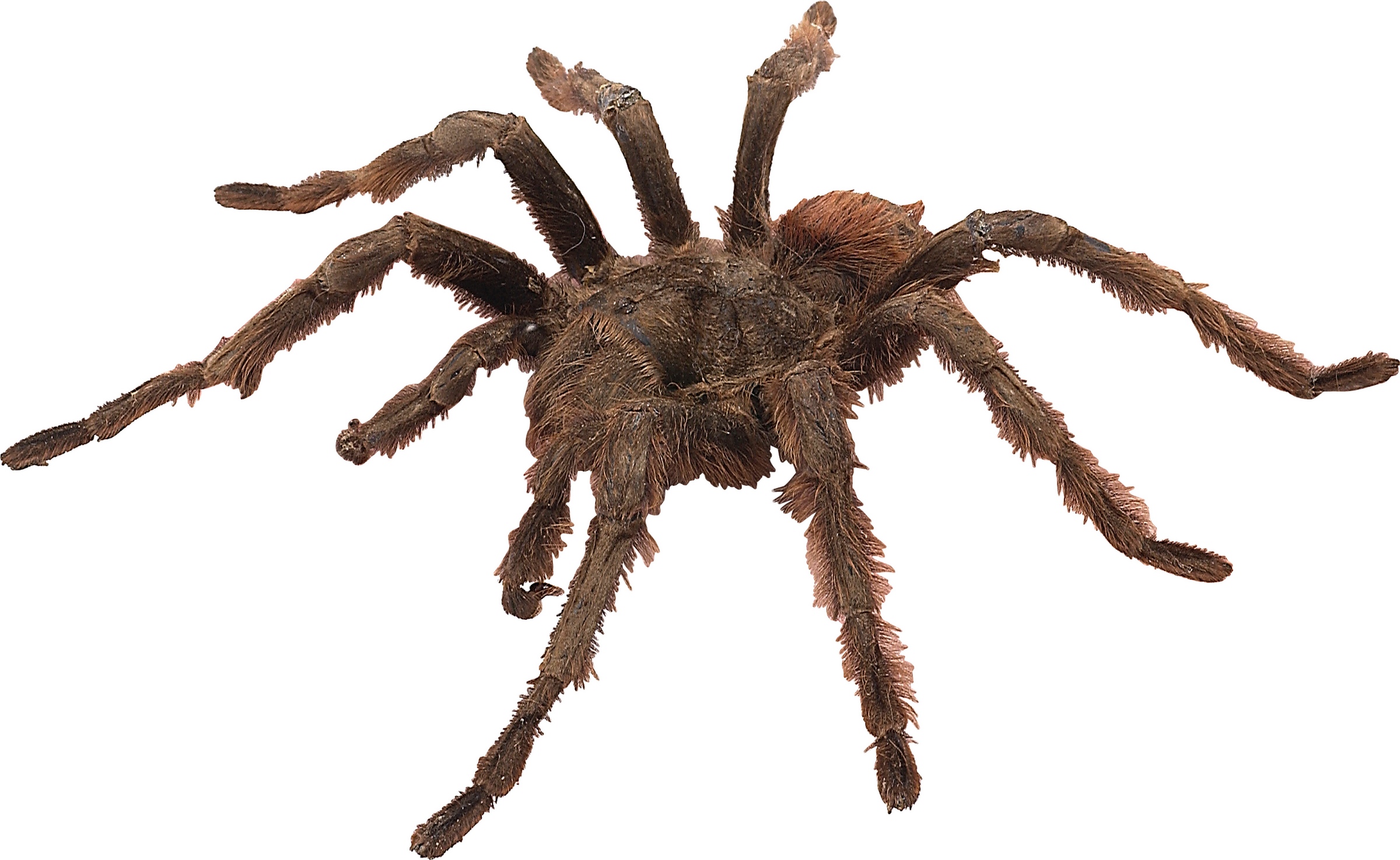
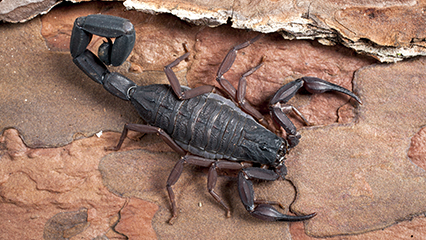
The Florida Department of Agriculture and Consumer Services' Division of Plant Industry (FDACS-DPI) regulates the importation, movement and possession of exotic organisms that pose a potential threat to Florida’s agricultural and natural resources. Arthropods, invertebrates and other plant pests (nematodes and plant pathogens) may require a permit to move into or within the state for any purpose. Such organisms deemed a public nuisance or medical hazard are also regulated by FDACS. Some native or naturalized species are regulated due to their status as a quarantinable pest or known pest of limited distribution. The information and resources included here detail when an FDACS permit for regulated organisms is necessary and how to obtain one.
Who Needs a Permit?
Anyone who imports arthropods, invertebrates or plant pests (pathogens and nematodes) into Florida from any other state or country, or who moves nonnative or exotic species of these organisms within the state for any purpose, must obtain a permit. Those who possess or display regulated organisms can also pose a risk to Florida’s native and commercial agricultural resources. There are four main categories of permit holders to consider:
Scientific Research
This category includes private industry, government agencies or academic institutions, and individuals who plan to conduct research in a lab, greenhouse, field or other controlled facility. Research projects which involve the release of regulated organism into the environment for biological control or other purposes may also need a permit depending on the species and source of material.
Public Outreach or Educational Display
This category includes entities such as zoos, museums, gardens or schools that may have regulated organisms as part of a public display. Business, non-profit or extension-related activities that involve the transportation of arthropods, invertebrates or other plant pests for “show-and-tell” would also be included in this category. There is no intent to distribute, sell or release.
Commercial Breeding and/or Sale
This category includes biological supply companies, breeders, retailers and stock dealer/wholesalers that sell or distribute their products to Florida customers via:
- Online marketplaces (includes e-commerce and social media platforms)
- Physical storefronts (includes home businesses)
- Industry expos, tradeshows or temporary pop-up markets
- Note: Brokers or drop-shippers who operate in Florida may be excluded if they do not have an inventory in-state. However, they should not market/sell any restricted or prohibited species to Florida-based customers.
Hobbyists and Pet Owners
This category includes individuals who raise or keep regulated organisms as pets, feeders or for other personal use. There is no intent to further distribute, sell or release. Most individual pet owners are not required to have a permit if their pet is obtained from a verifiable permitted source (in or out of state). Individuals that move to Florida and bring nonnative or exotic arthropod pets should obtain a permit for the one-time movement of that species.
Certain arthropods (including those used as feeders for other pets) and invertebrates may be prohibited species due to a high risk of establishment or potential to cause unacceptable agricultural or ecological impacts (e.g., coconut crab, Birgus latro). Learn more by viewing our
Guidelines for Importing Exotic Arthropods and Other Invertebrates into Florida
[
 211.4 kB
]
and other program resources.
211.4 kB
]
and other program resources.
How to Obtain a Permit
- Fill out an application [ Adobe PDF Document ] electronically using Adobe or similar PDF editing program.
- Or print and fill out the form by hand.
- Be sure to sign and date forms as requested. Incomplete or illegible applications can delay the review process.
- All State Permit Applications (forms starting in FDACS-08###), supplemental application information (such as Standard Operating Procedures), and questions regarding the permit process can be emailed to DPI-Permits@FDACS.gov or mailed to: Division of Plant Industry — Permit Section, P.O. Box 147100, Gainesville, FL 32614-7100.
- Further instructions for any required voucher specimens and fees will be sent as needed to the applicant.
Frequently Asked Questions
Why is a permit required?
By law, any organism that may pose a risk to Florida agriculture, become a nuisance, threaten native Florida wildlife, or pose a serious medical hazard to humans or livestock requires a permit to import into the state.
Who needs a permit?
Anyone who imports exotic organisms (for example, insects, spiders, scorpions, noxious weeds, plant pathogens and nematodes) into Florida from any other state or country, or who moves such exotic organisms within the state for any purpose, needs a permit. This especially applies to anyone engaged in wholesale import or sale, or otherwise serving as a broker to any business in the retail pet or bait trade.
Why do I need to send in voucher specimens for identification?
Voucher specimens may be required so that we may confirm the identity of the species you wish to import. These may be in the form of physical specimens or clear photographs. We keep these vouchers as a record that your permit is for the correct species. This is to your advantage in case any questions should arise in the future. Physical voucher specimens are not returned.
How many vouchers should I submit?
If your vouchers are butterflies, caterpillar specimens need to be sent (dead) in vials of alcohol. Adult specimens should be dead, dried and put in individual glassine envelopes. You should be able to obtain the specimens from your intended suppliers.
For other arthropods, at least one adult male and one adult female (preferably two pairs) should be submitted. In cases where the sex is not obvious (e.g., scorpions, millipedes), at least two adults should be submitted. Adults may be preserved in 70% isopropyl alcohol (rubbing alcohol) in a sealed container, safely packed to prevent leakage.
Specific instructions will be provided to the applicant detailing the type of vouchers to be submitted and any related fees. For requests that involve photographs only, view our
Photographic Voucher Guide
[
1 MB
]
for more information.
Are vouchers needed with an application for a permit to collect noxious weed species?
No, not with the initial permit application. Vouchers of noxious weeds should be sent only on request. In general, applicants should not collect noxious weed species to include as part of the application for a permit because transporting a noxious weed requires specific safeguards to avoid spreading the plant. If a voucher specimen is needed, instructions for safe handling of noxious weeds sent as vouchers will be provided to the applicant.
Are there regulations against selling certain types of arthropods?
Yes. Possession or importation of many species may be either prohibited or restricted to facilities that demonstrate rigorous containment protocols (e.g., research, academic or zoological institutions). Exotic plant-feeding insects, millipedes, some scorpions, and venomous arachnids and centipedes are among the arthropods that are restricted or prohibited from moving in commercial trade. They present an unacceptable risk of disrupting or damaging one or more components of Florida’s agricultural resources or ecosystems. Exotic terrestrial snails are also strictly prohibited.
Please Note: Certain prohibited species are illegally offered for sale within or for shipment to Florida. Not all commercial arthropod vendors comply with state or federal laws. When in doubt, contact the DPI Permit Section at DPI-Permits@FDACS.gov with any questions or concerns regarding permitted arthropods.
Are there guidelines for importing exotic and non-Florida arthropods?
Yes. View
Guidelines for Importing Exotic and Non-Florida Arthropods
[
211.4 kB
]
.
Do I need a permit only to ship native insects between two locations in Florida?
No. Neither the U.S. Department of Agriculture (USDA) nor FDACS regulates such activities.
What butterflies are allowed to be imported into Florida, and where may they be shipped from?
The following butterflies may be imported from east of the
100th meridian
[
263.8 kB
]
, except as noted:
- Agraulis vanillae
- Anartia jatrophae
- Colias philodice
- Danaus plexippus, Atlantic Coast States only
- Heliconius charitonius, South Carolina, Georgia, Alabama and Florida only
- Nymphalis antiopa
- Papilio polyxenes
- Vanessa atalanta
- Vanessa cardui
- Vanessa virginensis
Butterfly Maps:
-
100th Meridian Map
[
263.8 kB
]
-
Continental Divide Map
[
53.1 kB
]
May I ship a U.S. Monarch Butterfly from California to Florida?
No. At the present time, USDA Animal and Plant Health Inspection Service (APHIS) regulations state that only monarchs from the Atlantic flyway (Atlantic coastal states) may be shipped into Florida. Learn more about federal butterfly requirements.
Is there more than one permit or form that I may need?
Federal permit requirements may apply to the importation of live arthropods, nematodes, noxious weeds and plant pathogens from other countries as well as interstate shipment of any species that are regulated domestically by USDA APHIS. For more information, visit the USDA's Regulated Organism and Soil Permits page.
The importation and movement of dead/preserved specimens is also regulated by the U.S. Fish & Wildlife Service (FWS). Visit the FWS website for more information on any requirements.
Where do I list all the species to be imported?
On the FDACS-08208 application form [ Adobe PDF Document ], on lines 9, 10 and 11, type the first four species you wish to import. Any additional organisms to be moved are listed starting at line 34. Be sure to provide the biological information and shipping requested.
How do I apply for a permit?
Apply for a permit by emailing the Permit Section at DPI-Permits@FDACS.gov or call 1-888-397-1517.
A pre-filled sample FDACS-08208 application form can be viewed here:
Pre-Filled Sample 208 — Exotic Invertebrate
[
641.6 kB
]
.
How long is a permit valid for?
On average a permit will be valid for one to three years from the date it is issued.
How do I renew an existing permit?
We recommend submitting a renewal application at least 60 days prior to the expiration of an existing permit to ensure adequate time for processing. A renewal application should have up-to-date contact information, an accurate inventory of the species to be moved (or in possession), and a recent applicant signature. You can reference your previous permit number in line 1.
Can I amend or update my permit?
Amendments such as updating contact information, adjusting project assistants, adding/removing species, or a change in general methodology, can be completed by submitting an Amendment Request Form. Contact the DPI Permit Section at DPI-Permits@FDACS.gov to obtain a blank form.
Note: Permits cannot be transferred from one individual to another. A new application for a permit will be required if the primary responsible person listed on the permit has changed.