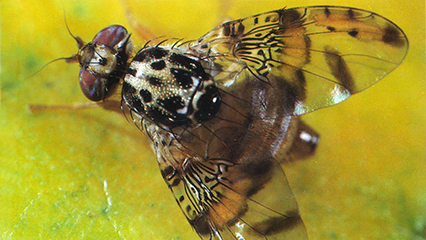
Fruit flies are one of the most destructive pests in the world and have a wide host range including fruits, vegetables and nuts, and most of Florida’s crops, including citrus. It is imperative to act quickly and decisively when any species of exotic fruit fly is found. Examples of these fruit flies include Oriental, Mediterranean, Mexican, Caribbean, guava and peach fruit flies. The Mediterranean fruit fly alone infests over 250 varieties of fruits.
Fruit fly lifecycles vary depending on the climate. Females can lay eggs daily, producing thousands of eggs in a lifetime. Their larvae feed inside healthy fruits and render them inedible. Due to the ease and frequency insect pests travel in commerce and personal baggage, it is critical FDACS's Division of Plant Industry (DPI) maintain an early warning system to detect fruit fly incursions into Florida.
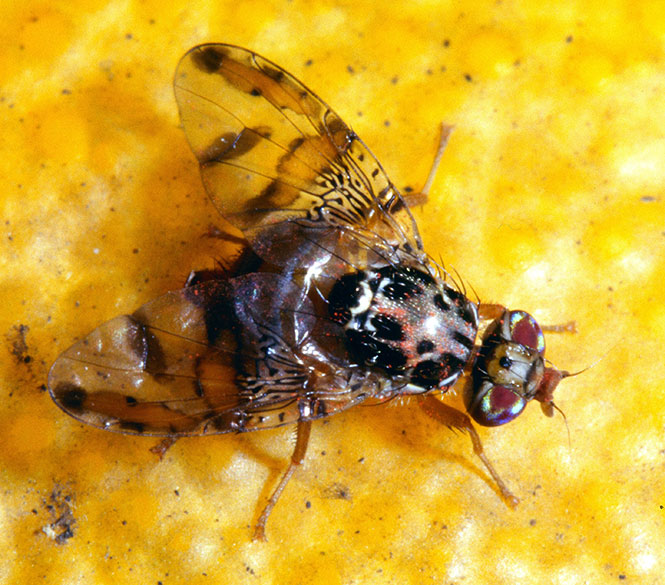
Mediterranean Fruit Fly
DPI and the U.S. Department of Agriculture (USDA) employ teams of fruit fly trappers who place around 56,000 traps spanning over 8,000 square miles in Florida. These traps are serviced every seven to 21 days. Trap locations include host trees on residential property and on roadsides in rural areas, along with high-risk introduction points, such as international ports of entry, and other areas with potential for illegal fruit introductions.
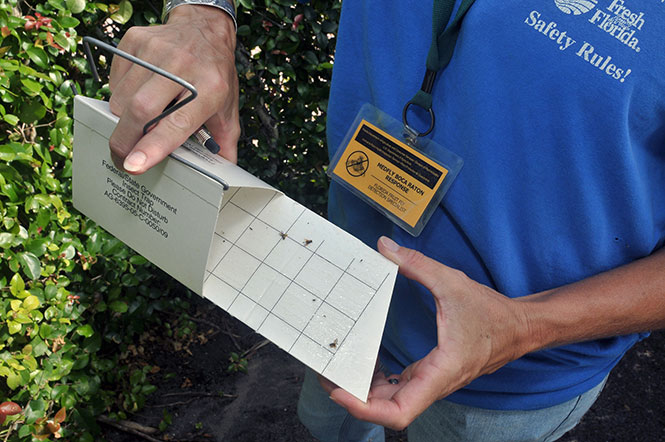
Inspector checking Jackson trap
The program uses various kinds of traps with different bait mixtures and pheromones to attract a variety of target exotic fruit flies. Traps are placed high enough in host trees to be out of reach of children, livestock and pets. You may find a trap high up in a tree at your home, but there is no need for concern if it is out of reach. These traps are a key component to ensuring destructive fruit fly pests are detected early and are not able to establish in Florida and inflict permanent damage to commercial and dooryard fruit and vegetable production.
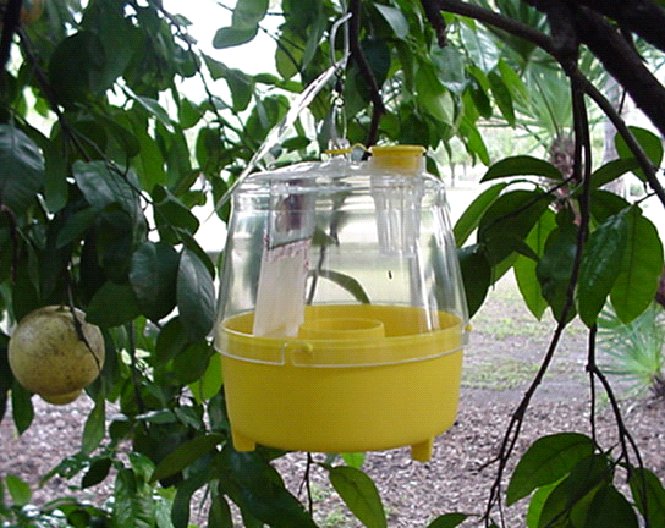
Multi-lure trap
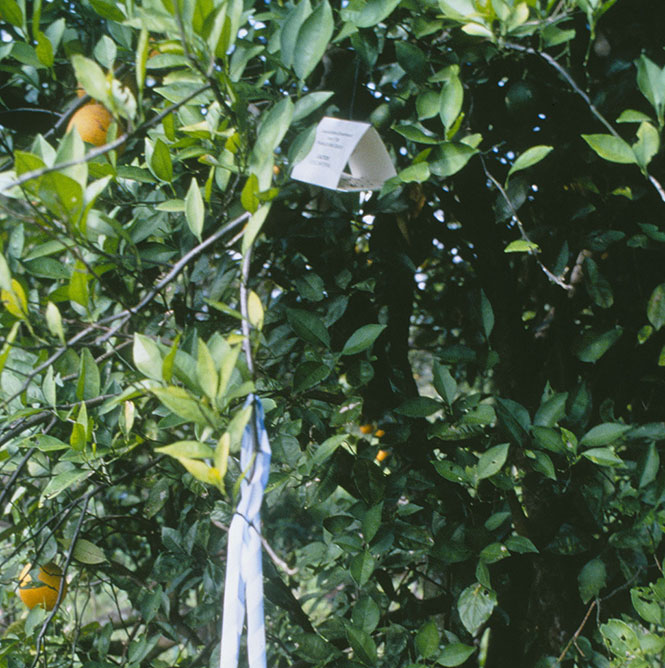
Jackson trap
Our traps are placed in trees with permission and serviced frequently. Placement of traps may rotate to different areas throughout the year. We understand property ownership and tenants change. If you have questions about a trap on your property or would like a trap removed, please call the DPI Helpline at 1-888-397-1517.
If you see these traps in your trees, please be aware that you are helping our mission of protection through detection. If a trap falls to the ground, please call the DPI Helpline and a trapper or inspector will come relocate the trap.
For more information regarding exotic fruit fly pests and cooperative programs, visit the USDA-APHIS Fruit Fly Information page.
Other Flies of Interest
-
Spotted Wing Drosophila
[
 363.3 kB
]
363.3 kB
]