Mission
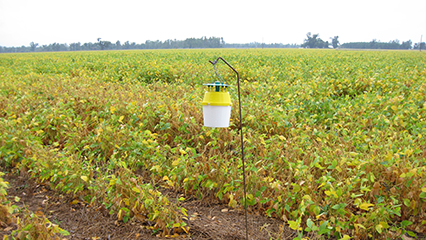
The Cooperative Agricultural Pest Survey (CAPS) Program is a combined effort by state and federal agricultural agencies to conduct surveillance, detection and monitoring of exotic plant pests of agricultural and natural plant resources and biological control agents. Survey targets include plant diseases, insects, weeds, nematodes and other invertebrate organisms.
Hot Topics
-
Lime Swallowtail
[
 900.4 kB
]
900.4 kB
]
-
Asian Long-Horned Beetle
[
2.5 MB
]
-
Cotton Seed Bug
[
412.4 kB
]
-
Spotted Lanternfly
[
733.8 kB
]
-
Two-Spot Cotton Leafhopper, Amrasca biguttula
[
6.4 MB
]
Education and Outreach
-
Insects Coloring Book
[
8.8 MB
]
-
Wildflowers Coloring Book
[
6.3 MB
]
CAPS Accomplishment Reports
-
2023 CAPS Infrastructure Annual Accomplishment Report
[
269.5 kB
]
-
2023 CAPS Survey Annual Accomplishment Report
[
2.5 MB
]
-
2022-2023 CAPS Combined Survey Third-Fourth-First Quarter Report
[
8.2 MB
]
-
2022 CAPS Infrastructure Annual Accomplishment Report
[
770.6 kB
]
History of the CAPS Program
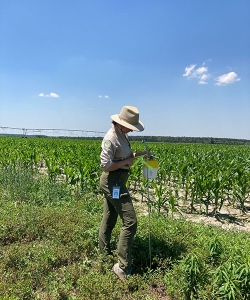
CAPS has evolved from an initiative begun by the Intersociety Plant Protection Consortium in 1980. First known as the Cooperative National Plant Pest Survey and Detection Program, CAPS was envisioned as a coordinating mechanism for all pest surveys in the U.S.
In 1992, CAPS was redirected to address a reduced set of goals and objectives more realistically suited to the available resources and within the mission of United States Department of Agriculture-Animal and Plant Health Inspection Service-Plant Protection and Quarantine (USDA-APHIS-PPQ).
PPQ has three legally mandated responsibilities:
- Protect American agriculture from foreign plant pest introduction and establishment,
- Facilitate export of American agricultural products, and
- Control or eradicate pests as authorized by legislation and regulation.
The CAPS Program assists PPQ in meeting these responsibilities by providing means for detection, documentation, and rapid dissemination of information on plant pests and biocontrol agents in the U.S. PPQ funds are allocated through cooperative agreements to conduct projects that meet these aims.
PPQ's top management officials met in 1996 to discuss how to redefine and implement its goals. Together with their state counterparts at the National Plant Board (NPB), the Safeguarding Review Study was formed, and in July 1999 made their recommendations in the Safeguarding Review Report, Safeguarding America's Plant Resources. The review contained more than 300 recommendations, some of which were already planned or underway, while others represented completely new approaches. One of the most critical areas of need identified in the Safeguarding Review was the need to strengthen the pest detection infrastructure and to develop a more effective system for prioritizing pest detection activities. The events of September 11, 2001, led to a recognition that we must strengthen pest detection if we are to ensure the future of food security in America. As a result, the FY 2002 supplemental appropriation provided $25 million in pest detection funds, which is used for critical needs such as surveys to support ongoing emergency programs and other pest management programs, and for supporting a stronger federal-state cooperative pest detection program. To meet these needs, CAPS was assigned more invasive plant pest detection and response priorities and with implementing proactive survey and detection activities in the United States. CAPS is also working with PPQ and other agencies to incorporate the pest lists, PPQ interception data, existing pest detection databases, and other data into a linked database that can be used for multiple purposes-risk assessment, resource allocation, staffing, strategic planning, and operational planning.
CAPS participants from state agencies may be interested in monitoring plant pests to determine first-of-season occurrences, population levels, and other pest-related phenomena.
PPQ supports these activities with communications, data management, and networking resources. Often, field work can be conducted to meet multiple needs simultaneously.
The CAPS program serves the public and private sectors by improving the quality and availability of pest information. The existing CAPS networks are committed to expanding utilization of pest data in support of an environmentally sound, competitive, and profitable American agricultural system.