The Florida Department of Agriculture and Consumer Services (FDACS) operates three facilities for rearing insects used in biological control programs: the Biological Control Rearing Facility in Gainesville, the Gainesville Biological Control Laboratory, and the Dundee Biological Control Laboratory.
The Biological Control Rearing Facility
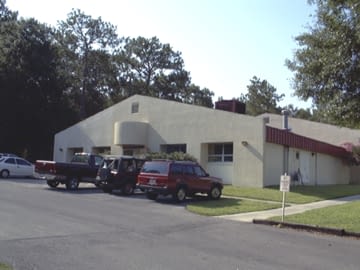
Biological Control Rearing Facility in Gainesville
The Biological Control Rearing Facility, located in Gainesville, Florida, was completed in June 1987 for approximately $1.25 million, originally for rearing the Caribbean fruit fly to conduct sterile release research programs and to provide insects for other research projects.
The building has about 15,000 square feet available for rearing, quality control, shipping and techniques development. One side of the facility was constructed with movable walls so that it could be adapted for rearing other insects.
A number of trailers are located nearby for additional rearing and chemical control studies.
The Gainesville Biological Control Laboratory
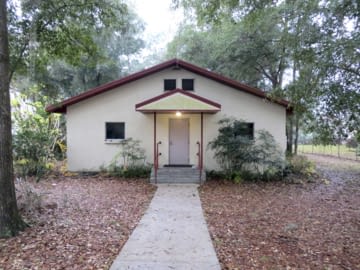
Gainesville Biological Control Laboratory (Bio II)
The Gainesville Biological Control Laboratory (Bio II), located in Gainesville, Florida, houses various biological control programs that are continuously adapted to the needs of the state of Florida. The main facility is a 2,550-square-foot, multi-compartmented laboratory used for both mass-rearing and research operations.
Two commercial trailers near the main facility offer additional laboratory space. The laboratory is supported by six greenhouses and a large screenhouse, which are used for the production and maintenance of the required plant material for current projects.
The overall laboratory design allows for the rapid integration of new projects, strict compartmentalization of various procedures and continuous methods improvement of ongoing projects through small-scale testing of rearing procedures. The research and methods developed at this facility are transferred to various operations including our large-scale production facility in Dundee, Florida.
The Dundee Biological Control Laboratory
The Dundee Biological Control Laboratory is a 30,000-square-foot complex of greenhouses, laboratories, insect-rearing chambers and support facilities located in the town of Dundee, in the heart of the citrus growing region of Central Florida. Opened in 2014, the laboratory serves as a mass-rearing facility for insect parasites and is currently being used for the production of Tamarixia radiata, a tiny parasitoid wasp that is a very effective natural enemy of the Asian citrus psyllid (Diaphorina citri), the vector of a serious citrus disease known as greening or Huanglongbing. T. radiata rearing activities are also conducted in FDACS's Gainesville laboratory.
In 2015, the Dundee laboratory produced 2.3 million Tamarixia to combat the Asian citrus psyllid. The Tamarixia Release Program focuses primarily on sites that harbor psyllid populations but receive few if any pesticide treatments and includes sites such as organic citrus groves, abandoned groves, dooryard citrus, and plantings of alternate host plants (e.g., orange jasmine hedges, Murraya paniculata).

