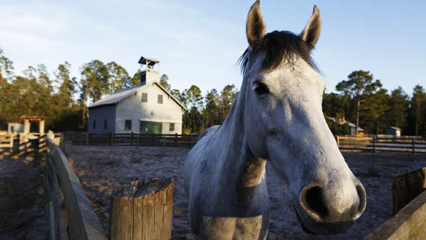
Learn about rabies in horses.
Rabies is a fatal central nervous system disease that can affect all warm-blooded mammals, including humans.
It is caused by the rabies virus, Lyssavirus, from the family Rhabdoviridae.
Although it is not common in horses, it is considered a differential diagnosis for any horse exhibiting acute neurologic symptoms due to its zoonotic potential (ability to infect humans).
Rabies is typically transmitted via contamination of a wound or mucous membrane with infectious saliva.
The most common route of infection in the horse is a bite wound from a wild carnivore or bat carrying the virus.
Reservoir hosts in the United States include, but are not limited to, skunks, raccoons, the red fox, dogs, cats and even other horses.
The rabies virus can be transmitted through droplet inhalation in bat caves or laboratory settings where high concentrations of viruses are found in the air. Oral and transplacental transmission is rare, but also possible.
The incubation period for rabies in horses varies between nine days and one year.
Infection with the rabies virus results in central nervous system signs.
The most common symptoms include unexplained paralysis or behavioral signs such as anorexia, irritability and hyperexcitability. Some horses seek solitude or become aggressive. Distress and extreme agitation associated with rabies infection may resemble colic.
There are three different classifications associated with rabies virus infection in horses depending on the area of central nervous system affected:
Antemortem diagnosis of rabies can be extremely challenging.
Fluorescent antibody testing of corneal epithelium or tactile hair follicles of facial skin to detect rabies virus antigen may aid in diagnosis, but a negative test does not exclude the possibility of rabies virus infection.
Identification of rabies virus in postmortem tissue samples is currently the preferred means of obtaining a diagnosis.
The immunofluorescent antibody test (IFAT) is recommended on a fixed brain tissue smear and provides a reliable diagnosis in the majority of cases.
Mouse inoculation and cell cultures can be used as backup tests, and monoclonal antibody techniques may help to distinguish vaccine strains from field strains.
A portion of the brain can also be submitted for histological examination to detect aggregates of viral material called “negri bodies” in neurons, but this test is less sensitive and approximately 40 percent of samples give false-negative results.
No specific treatment exists for rabies in horses.
Supportive care may prolong the course of disease and create a greater risk of exposure to handlers and other animals.
Horses with known exposure to rabies should have all wounds cleaned with quaternary ammonium disinfectants or iodine preparations and should have rabies antiserum (if available) infused around the bite wound.
It is recommended that all horses in the United States be vaccinated against rabies.
Available vaccines are inactivated tissue culture-derived products with an adjuvant.
These vaccines are effective at preventing the disease.
Check with your veterinarian for the vaccination protocol that best fits your horse.
Due to its zoonotic potential and public health concerns, rabies must be reported to state officials upon suspicion or diagnosis of the disease.
Horses with suspected rabies should be euthanized immediately and brains submitted for testing.
Any unvaccinated horses that have been exposed to rabies should be euthanized immediately.
If the horse’s owner is unwilling, the horse should be placed under quarantine for six months and observed.
One month prior to release, the horse should be vaccinated for rabies.
Exposed horses with current vaccination status should be revaccinated and closely monitored for 45 days.
Cases of human exposure must be treated immediately.
Suspected or known cases of rabies, in any animal, must be reported to the State Veterinarian’s Office. To report rabies or other reportable diseases, call (850) 410-0900 from 8 a.m. to 5 p.m., Monday through Friday. For after-hours reporting, call 1-800-342-5869 or email RAD@FDACS.gov.