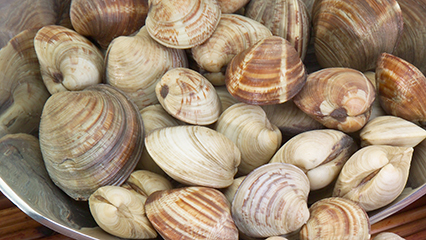
Clams and oysters are the shellfish most commonly produced in Florida. Shellfish farming is a multi-step process that includes production of small seed clams or oysters in a hatchery, rearing of larger seed in a nursery, growout on submerged land leases, and sales at a certified shellfish processing facility. The Florida Department of Agriculture and Consumer Services (FDACS) certifies and inspects shellfish producers and processing facilities.
Licenses and Permits
If you are interested in commercially culturing shellfish in Florida, you must apply for an Aquaculture Certificate of Registration and comply with
Aquaculture Best Management Practices
[
 960.9 kB
]
.
960.9 kB
]
.
Hatcheries
Hatcheries are typically upland (land-based) facilities. All facilities must be located, designed and operated to minimize environmental impacts and risks to public health. Hatcheries can be operated using a saltwater well or intake pipes from waters of the state. Aquaculturists often grow their own algae to optimize shellfish growth.
Nurseries
Nurseries can be upland or on
aquaculture docks
[
622.2 kB
]
. They provide the small seed clams or oysters produced in a hatchery with food and protection from predators until they are ready for growout.
Submerged Land Leases
Once shellfish reach the appropriate shell length (16 millimeters for clams and 25 millimeters for oysters), they must be moved to approved waters for growout. The producer's Aquaculture Certificate of Registration number must accompany shellfish being transported from a hatchery or nursery and to and from approved lease areas.
Sale — Certified Shellfish Processing Facilities
When shellfish have reached the preferred size for sale, they are harvested from the leases and delivered or sold to a certified shellfish processing facility. FDACS certifies and inspects shellfish processing facilities for compliance with shellfish handling, labeling and food safety requirements. Direct retail sale from the aquaculturist is prohibited until product has been processed and tagged at a certified shellfish processing facility.
Technical Assistance
Oysters
FDACS, in cooperation with the University of Florida's Shellfish Aquaculture Extension Program, has conducted a series of workshops on oyster culture, which is available on DVD. Topics include intensive oyster culture, gear, suppliers, the industry in the northeastern U.S., and harvesting and marketing. For a copy of the DVD, call (850) 617-7600 or email Aquaculture_Web@FDACS.gov.
Shellfish Water Quality Data
To download shellfish harvesting area water quality data files for each area, please see the Shellfish Harvesting Area Information page.
FDACS and the University of Florida post real-time weather and water-quality updates to help aquaculturists make planting, harvesting and crop-maintenance decisions. For additional information, visit the University of Florida's Online Resource Guide for Florida Shellfish Aquaculture.
Required Training for Shellfish Harvesters
All Aquaculture Certificate of Registration applicants who list marine shellfish (clams, oysters, scallops) as a product on their application must annually complete the Shellfish Harvester Education Training.
Shellfish Harvester Education allows Florida’s shellfish industry to meet National Shellfish Sanitation Program (NSSP) requirements for food safety training related to harvest and post-harvest handling approaches to minimize the growth of Vibrio and reduce the risk of consumer illness.
You may complete your training online or you may complete it in person at any of the following FDACS offices:
- Apalachicola Shellfish Center: (850) 653-8317
- Cedar Key Office: (352) 543-1084
- Melbourne Office: (321) 984-4890
- Panama City Office: (850) 236-2200
- Port Charlotte Office: (941) 613-0954
- Tallahassee Office: (850) 617-7600
Training Guidance
Refer to the following guidance documents as needed for Shellfish Harvester Education Training.